Opening: Discover Beijing’s Historic Mountain Garden
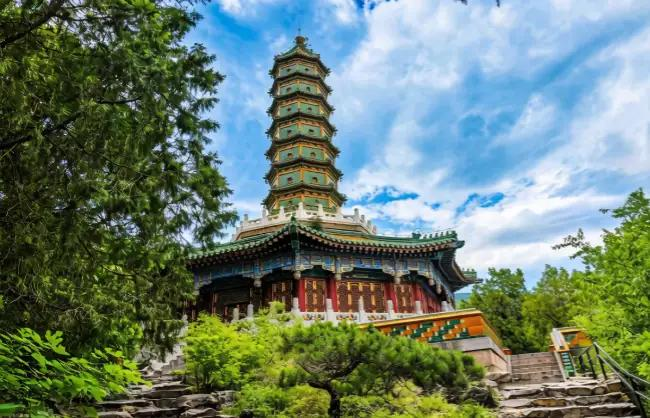
Xiangshan Park, also known as Fragrant Hills Park, is a historic imperial garden in Beijing’s Haidian District, northwest of the city center. Its history dates to 1186 during the Jin Dynasty, and successive rulers expanded the grounds before Emperor Qianlong developed Jingyi Garden in 1745 during the Qing Dynasty. Today, the park is a national 4A-rated tourist attraction, combining wooded mountains, traditional Chinese architecture, religious heritage, and important sites from modern Chinese history.
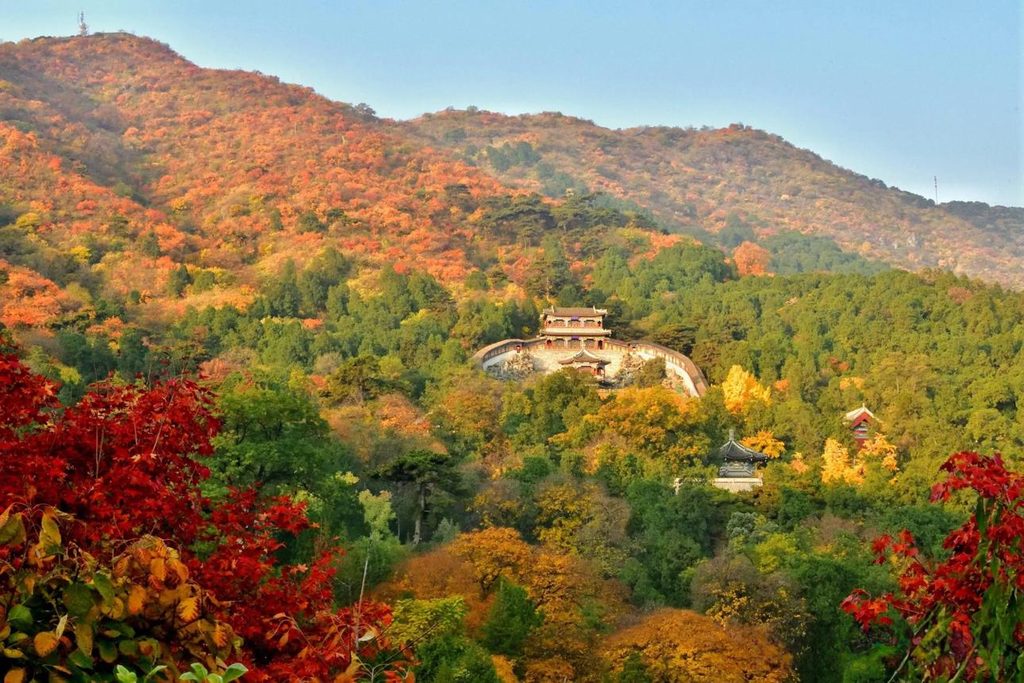
Unlike Beijing’s formal palace complexes, Xiangshan Park blends landscaped gardens with natural mountain terrain. Its highest summit, Incense Burner Peak, rises 575 meters above sea level. The park is particularly famous for its autumn foliage, when smoke trees and other deciduous species transform the hillsides into shades of red, orange, and gold. Visitors can also explore historic temples and Shuangqing Villa, where Communist Party leaders established their headquarters in 1949.
This guide will help you plan your visit, choose the right route, avoid common mistakes, and make the most of your time. The park is larger and more physically demanding than a typical urban garden, so choosing the right entrance, understanding ticket options, and allowing enough time for walking are essential.
Quick Facts
- Location: Haidian District, western Beijing, China.
- Built: First established in 1186 during the Jin Dynasty; expanded during the Yuan, Ming, and Qing dynasties.
- Scenic rating: National 4A-rated tourist attraction.
- Area: Approximately 168–188 hectares, depending on the published measurement.
- Highest summit: Incense Burner Peak, 575 meters above sea level.
- Ancient trees: More than 5,800 ancient and notable trees.
- Park entry: 10 RMB during peak season; 5 RMB during the off-season.
- Biyun Temple entry: 10 RMB for a standard ticket.
- Best time to visit: October to early November for autumn foliage; spring for fresh greenery.
- Recommended duration: 2–3 hours for a short visit; 4–6 hours for hiking and historical sites.
- Public transportation: Beijing Metro Line 10 to Bagou, followed by the Xijiao suburban tram to Xiangshan, or a suitable bus connection.
- Must-have: Passport or valid identification, comfortable walking shoes, water, and a charged phone.
Why Visit Xiangshan Park?
A Royal Garden with Nearly Nine Centuries of History
Xiangshan’s history stretches back to 1186, when the Jin Dynasty established an early scenic site here. During the Yuan and Ming dynasties, the surrounding hills continued to attract attention from rulers and visitors. The most significant expansion came in 1745, when Emperor Qianlong commissioned Jingyi Garden, creating a complex of halls, pavilions, temples, and landscaped viewpoints.
Xiangshan formed part of the celebrated Three Hills and Five Gardens of western Beijing, a group of imperial estates that reflected the Qing court’s interest in landscape design and mountain retreats. Rather than relying on symmetry alone, the garden uses its natural slopes, wooded valleys, and elevated viewpoints to create changing scenes as visitors move through the grounds.
Autumn Leaves That Define Beijing’s Fall
Xiangshan is one of Beijing’s best-known destinations for autumn foliage. Its red-leaf forest includes smoke trees, alongside other species that develop yellow, orange, and red colors as temperatures fall.
The result is not a single ornamental display but a broad landscape of changing color. The timing varies with temperature and weather, so the most vivid foliage does not arrive on exactly the same date every year.
For photographers, the most rewarding approach is to arrive early and walk beyond the immediate entrance area. The combination of red foliage, traditional rooflines, and distant mountain ridges offers more variety than photographing the crowded main paths alone.
A Blend of Nature, Religion, and Modern History
Xiangshan is not just a hiking destination. Biyun Temple, established during the Yuan period and later developed as a royal religious site, preserves an important layer of Beijing’s Buddhist heritage. Its architecture and courtyards provide a quieter contrast to the park’s popular mountain paths.
The park also contains the Xiangshan Revolutionary Memorial Site. In 1949, Mao Zedong and other Communist Party leaders established their headquarters in the area as the Chinese Civil War approached its conclusion. Shuangqing Villa, one of the principal sites, preserves the historical setting of this period.
A Destination for More Than Hikers
Xiangshan suits a broad range of travelers. History enthusiasts can concentrate on temples and revolutionary sites, while photographers can focus on seasonal foliage and traditional architecture. Families can enjoy shorter walks near the lower gardens, although steep paths make the summit less suitable for visitors with limited mobility.
The park’s main advantage is flexibility. A brief visit can introduce its gardens and history, while a full day allows time to explore the hills and several cultural attractions.
Tickets: Buy the Combo Ticket if Visiting Biyun Temple
The most important ticket tip is to distinguish the park entrance ticket from the Biyun Temple ticket. The standard park ticket covers the main grounds, while Biyun Temple requires a separate ticket unless you purchase the applicable combo ticket.
| Ticket Type | Price | Notes |
|---|---|---|
| Adult park ticket, peak season | 10 RMB | April 1 – November 15 |
| Concession park ticket, peak season | 5 RMB | Eligibility requirements apply |
| Adult park ticket, off-season | 5 RMB | November 16 – March 31 |
| Concession park ticket, off-season | 2.5 RMB | Eligibility requirements apply |
| Adult Biyun Temple ticket | 10 RMB | Separate admission |
| Concession Biyun Temple ticket | 5 RMB | Eligibility requirements apply |
| Adult combo ticket, peak season | 15 RMB | Park and Biyun Temple |
| Concession combo ticket, peak season | 7 RMB | Check eligibility |
| Adult combo ticket, off-season | 14 RMB | Park and Biyun Temple |
| Concession combo ticket, off-season | 7 RMB | Check eligibility |
The peak-season combo ticket saves 5 RMB compared with buying the two standard tickets separately. In the off-season, the combo ticket saves 1 RMB.
How to Buy Tickets
- Check the official website. Visit the Xiangshan Park official website for current prices, opening hours, and visitor information.
- Use the official booking channel. The park provides ticketing through its official WeChat account, Xiangshan Park Services, and its official mini-program. Confirm the current booking procedure before departure.
- Prepare your passport. Foreign visitors should carry their passports and use their passport details if a real-name booking or identity check is required.
- Confirm special-site access. If Biyun Temple or the revolutionary memorial sites are a priority, verify their operating days before purchasing tickets.
- Keep your payment confirmation. Save your booking details and any QR code on your phone. Alipay and WeChat Pay are widely used in Beijing, although payment options at individual ticket counters may vary.
Free Admission and Concessions
The park publishes standard and concession ticket prices. Eligibility and documentation requirements for discounted admission should be checked with the official park service before arrival.
Do not assume that every child, senior citizen, disabled visitor, or military visitor automatically receives free entry to every part of the park. Concessions for the park, Biyun Temple, and other attractions may differ.
Important warnings:
- Biyun Temple and the park are not the same ticketed attraction. Check your ticket’s inclusions.
- Several historical attractions close on Mondays, including Biyun Temple, Xiangshan Temple, and the revolutionary memorial sites, except on statutory public holidays. The main park itself generally remains open.
- Do not buy tickets from scalpers. Use official channels and avoid sellers offering unexplained discounts or guaranteed entry.
- Do not assume advance reservations or on-site sales operate the same way throughout the year. Verify the current policy before visiting.
- Autumn weekends can be exceptionally busy. Arriving early helps avoid crowds even when tickets are available.
Opening Hours
| Season | Opening | Last Entry | Closing |
|---|---|---|---|
| Peak: April 1 – November 15 | 6:00 AM | 6:30 PM | 7:30 PM |
| Off-season: November 16 – March 31 | 6:00 AM | 6:00 PM | 7:00 PM |
These are the published hours for the main park. Individual attractions may have shorter operating hours, separate ticket requirements, or different closing arrangements.
- Arrive in the morning if you want to enter the paid inner attractions. This gives you more time for temples, historical buildings, and hiking.
- Monday closures: The park’s revolutionary memorial sites, Xiangshan Temple, and Biyun Temple generally close on Mondays, except on statutory public holidays. Check the latest notice before traveling.
- Seasonal changes: Autumn foliage events, public holidays, maintenance, and weather can affect visitor arrangements.
- Last entry is not the same as the closing time. Enter early enough to finish your planned route before the gates close.
Getting There
Public transportation is generally the most convenient way to reach Xiangshan Park. The attraction is in Beijing’s western suburbs, and traffic and parking demand can increase considerably during the autumn foliage season.
By Metro and Suburban Tram
A practical public transportation route is:
- Take Beijing Metro Line 10 to Bagou Station.
- Transfer to the Beijing Xijiao suburban tram.
- Ride to Xiangshan Station.
- Follow the signs toward Xiangshan Park’s entrances.
Check the latest operating schedule and transfer directions before departure. The Xijiao tram is a separate surface rail service rather than a conventional subway line.
Station exits and walking distances can depend on the route used. Confirm the current exit signage in your navigation app rather than relying on an unverified exit number.
By Bus
Several bus services have historically connected Xiangshan with western Beijing, including routes serving the Xiangshan stop. Routes and terminals can change, so check a current Beijing public transportation app for services from your hotel.
Bus routes serving the area have included 318, 360, 360 Express, 505, 563, 698, and 932. Verify the current route, stop, and direction before setting out.
Buses may be useful if traveling from nearby districts or other attractions in Haidian. During peak foliage periods, however, crowded vehicles and road congestion can make journey times unpredictable.
By Taxi or Ride-Hailing
A taxi or ride-hailing service can be convenient for families and travelers carrying extra equipment. Set the destination to the official Xiangshan Park entrance you intend to use, and allow additional time for traffic.
During major autumn weekends, vehicles may be directed to designated drop-off areas away from the entrance. Follow local traffic instructions rather than expecting a driver to stop directly at the gate.
By Car
Driving is possible, but it is not the preferred option during busy foliage periods. Parking in the surrounding area is limited relative to visitor demand, and temporary traffic controls may apply.
Check the official parking information before setting out. Do not assume that a space will be available near the main entrance.
Insider tip: Arrive early on autumn weekends. Public transportation avoids some parking problems, but the final part of the journey can still be crowded.
Suggested Routes
The following routes are practical itineraries rather than guaranteed access schedules. Check the official park map and any temporary closures before choosing your route.
1. 2-Hour Essential Route
Best for first-time visitors who want to experience the gardens, see the historic architecture, and enjoy the mountain scenery without attempting the summit.
Route: East Gate → Jingcui Lake → Yuhua Xiu → central garden paths → East Gate.
The route emphasizes lower areas and scenic stops. Walking conditions vary, but this is a better option for visitors with limited time than attempting to climb Incense Burner Peak.
2. 4–6-Hour Deep Exploration Route
Best for history enthusiasts and visitors who want a broader experience of Xiangshan’s imperial and modern history.
Route: East Gate → Qinzheng Hall → Shuangqing Villa area → Xiangshan Temple → mountain paths → Incense Burner Peak → return to a designated exit.
This route includes uphill walking, uneven surfaces, and potentially steep steps. Allow extra time for historical sites and photography. The summit section is optional; visitors should turn back if weather, fitness, or available time makes the climb unsuitable.
3. 2–3-Hour Family-Friendly Route
Best for families, older visitors, and travelers who prefer a relaxed walk rather than a strenuous hike.
Route: East Gate → Jingcui Lake → Yuhua Xiu → selected garden viewpoints → East Gate.
Stay mainly on the lower paths and take breaks when needed. Avoid committing to steep summit trails if traveling with young children or anyone with mobility limitations.
4. 2–3-Hour Photography Route
Best for photographers who want foliage, garden architecture, and mountain views in a single visit.
Route: East Gate → Jingcui Lake → Yuhua Xiu → selected red-leaf viewpoints → return to East Gate.
Arrive near opening time for quieter paths and softer light. During peak autumn color, popular viewpoints may become crowded, so leave time to explore secondary paths. This route does not require a summit climb.
Route planning note: The park has steep mountain terrain, and routes can involve backtracking. Do not assume that a short distance on the map translates into a short walking time.
Must-See Highlights
1. Incense Burner Peak
Rising 575 meters above sea level, Incense Burner Peak is the highest summit in Xiangshan Park and a major destination for hikers. The ascent rewards visitors with broad views across the surrounding hills, although visibility depends on weather and air quality.
Tip: Start early, wear shoes with good grip, and allow enough time for the descent. The central route is generally gentler than the steeper northern route.
2. The Red-Leaf Forest
Xiangshan’s autumn foliage is its best-known attraction. Smoke trees provide much of the characteristic red color, while other species contribute shades of yellow and orange.
The foliage covers a broad landscape rather than a single ornamental display.
Tip: Check seasonal foliage reports before traveling, since peak color varies by year. Mid-to-late October through early November is a useful general planning window.
3. Shuangqing Villa
Shuangqing Villa is a key site associated with Mao Zedong and the Communist Party leadership’s presence in Xiangshan in 1949. It provides historical context for the transition from the Chinese Civil War to the establishment of the People’s Republic of China.
Tip: Visit early enough to accommodate any separate access arrangements, and check for Monday closures.
4. Biyun Temple
Biyun Temple originated during the Yuan Dynasty and later became a royal religious site. Its traditional courtyards and architectural details make it one of the park area’s most important cultural attractions.
Admission is separately priced unless covered by the applicable combo ticket.
Tip: Confirm the temple’s opening day and ticket arrangements before visiting.
5. Qinzheng Hall
Qinzheng Hall stands near the park’s East Gate and reflects the imperial garden’s historical character. Its traditional architectural form provides a useful introduction to the site’s relationship with Qing Dynasty court culture.
Tip: Check whether the building is accessible on your visit date before making it a central stop.
6. Jingcui Lake
Jingcui Lake is a convenient scenic stop near the park’s eastern entrance. Water, trees, and surrounding slopes create a different atmosphere from the steep mountain paths, making this a useful location for relaxed photography.
Tip: Visit early for quieter paths and reflections before the main crowds arrive.
7. Yuhua Xiu
Yuhua Xiu is a garden area associated with Xiangshan’s traditional landscape design. Its setting offers a contrast to the park’s more demanding hillside routes.
Tip: Include it in a short itinerary if you want to enjoy the garden scenery without committing to a long climb.
8. Zhao Miao (Bright Temple)
Zhao Miao is a Tibetan Buddhist temple complex associated with the Qing imperial court. It was built in 1780 in connection with the visit of the Sixth Panchen Lama. The complex preserves distinctive Tibetan-style architectural elements.
Tip: Check access arrangements in advance, particularly if combining the temple with a longer hiking route.
Best Time to Visit
Best Seasons
Autumn, especially late October and early November, is the classic season for visiting Xiangshan Park. The red-leaf forest attracts large numbers of visitors, but the exact peak depends on weather conditions.
Spring is a good alternative for fresh foliage, milder temperatures, and garden walks. Summer provides dense greenery and shade, while winter offers a quieter atmosphere and occasional snow-covered scenery.
Best Time of Day
Arriving shortly after the park opens is the best strategy for avoiding the largest crowds. Early morning also offers softer light for photography and cooler conditions for climbing.
Late afternoon can provide attractive light on the hills, but do not start a long ascent close to the last-entry time. Allow enough time to return to an exit before closing.
Seasonal Highlights
- Spring: Fresh leaves, flowering plants, and comfortable walking weather.
- Summer: Dense forest, shaded trails, and a green mountain landscape.
- Autumn: Red smoke-tree foliage, colorful hillsides, and the park’s busiest period.
- Winter: Bare branches, quiet paths, and occasional snow scenery.
Night Views
Xiangshan is primarily a daytime destination. The published closing times do not support planning an ordinary after-dark visit, and visitors should not assume that the park offers a regular night illumination program.
Chinese Public Holidays to Avoid
Crowds are particularly heavy during National Day Golden Week, October 1–7, and the Labor Day holiday around May 1–5. Spring Festival, usually in January or February, can also affect transport and local operating schedules.
For autumn foliage, a weekday morning outside major holiday periods is generally a better choice than a weekend during peak color.
Common Mistakes to Avoid
1. Buying the wrong ticket. The park and Biyun Temple have separate admission arrangements. Check whether a combo ticket is appropriate for your itinerary.
2. Assuming every attraction is open on Monday. Several temples and revolutionary memorial sites generally close on Mondays, except on statutory public holidays. Verify the schedule before visiting.
3. Arriving without identification. Keep your passport with you and use the same passport details for any real-name booking that requires them.
4. Starting the hike too late. Incense Burner Peak requires considerably more time and effort than a garden walk. Begin early and allow time to descend.
5. Assuming the metro reaches the park entrance directly. The Xijiao tram or a bus connection may be needed after the subway. Check the full route before leaving your hotel.
6. Driving during peak foliage season without checking parking. Traffic restrictions and limited parking can add substantial delays. Public transportation is often more practical.
7. Expecting peak foliage on a fixed date. Leaf color depends on weather and seasonal conditions. Check recent park updates instead of relying solely on last year’s photographs.
8. Underestimating the walking distance. The park covers a large area with slopes and steps. Choose a route suited to your fitness level and avoid attempting every highlight in one visit.
9. Ignoring weather and air quality. Heat, rain, slippery paths, or poor visibility can make mountain walking less comfortable. Check conditions and adjust your plans.
10. Bringing restricted photography equipment. Drones, tripods, selfie sticks, and glass bottles may be restricted in particular areas or under current visitor rules. Check the latest official notice and follow security instructions.
11. Relying entirely on cash or an unfamiliar payment app. Mobile payment is common in Beijing. Set up a suitable payment method in advance, and carry a backup where practical.
What to Bring
- Passport and booking confirmation: For identification and any required real-name entry checks.
- Comfortable walking shoes: Essential for uneven paths, stairs, and uphill sections.
- Water and light snacks: Useful during longer hikes; follow park rules on waste disposal.
- Sun protection: A hat, sunscreen, and sunglasses are especially useful in summer.
- Warm layers: Mountain areas can feel colder than central Beijing, particularly in winter.
- Rain jacket or umbrella: Weather can change, and wet paths may become slippery.
- Power bank and mobile payment app: Helpful for navigation, payments, and ticket access.
- Camera or phone: Useful for the foliage, temples, and mountain views.
- Translation app: Helpful for signs, transportation instructions, and ticket information.
- Insect repellent: Worth carrying during warmer months when walking among trees.
- Light jacket: Useful during cooler mornings and late-afternoon visits.
Food and Drink Nearby
Xiangshan is primarily a mountain park and historic garden rather than a dining destination. Food availability and prices inside the grounds can vary, so it is sensible to bring water and a small snack for a longer hike.
The following options are practical dining areas and food styles to consider rather than a verified list of currently operating restaurants. Check opening hours and current menus before making a special trip.
1. Food stalls and simple eateries near the park entrances: Convenient for noodles, dumplings, and basic snacks before or after walking. Budget-friendly options may be available, but prices and opening hours vary with visitor demand.
2. Local restaurants around the Xiangshan area: Look for home-style Chinese cooking, rice dishes, vegetables, and stir-fried meat. These are useful choices for a substantial meal after hiking, with prices depending on the restaurant.
3. Beijing-style noodle restaurants: A bowl of noodles is a practical, filling option after a long walk. Budget around 20–40 RMB per person as a planning estimate, not a confirmed current menu price.
4. Restaurants serving Beijing specialties: Look for dishes such as zhajiangmian, a traditional noodle dish served with soybean paste and vegetables. Allow approximately 25–60 RMB per person at a casual restaurant, depending on the menu.
5. Cafes and light-meal venues in the wider Haidian area: Suitable for coffee, sandwiches, or a rest before continuing to another attraction. These are more useful if you are returning by car or public transportation and can choose a convenient stop along the route.
6. Restaurants around nearby western Beijing attractions: If Xiangshan is part of a full-day itinerary, consider eating near your next destination rather than walking back to the park entrance solely to find a meal. Check the route and restaurant hours first.
Practical tip: Do not plan a demanding summit hike around an unverified restaurant reservation. Carry water, eat beforehand if necessary, and leave enough time to return to the entrance.
Final Thoughts
Xiangshan Park combines the history of a Qing imperial garden with mountain trails, Buddhist architecture, and an important chapter of modern Chinese history. Its autumn foliage is the main attraction, but the historic buildings and wooded slopes make it worthwhile throughout the year.
Allow two to three hours for a relaxed introduction, or half a day if you want to explore the temples and climb toward Incense Burner Peak. Arrive early, check the operating schedule for individual attractions, and choose a route that matches your fitness level.
At Xiangshan, the most memorable view may be a traditional pavilion framed by red leaves, with the hills of western Beijing fading into the distance.