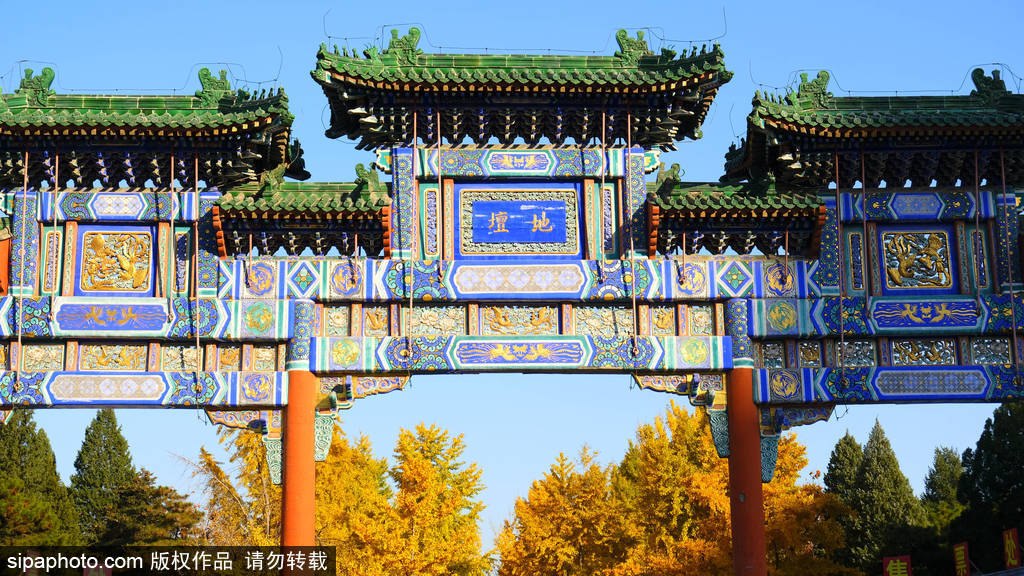
Ditan Park, known in English as the Temple of Earth, is a walled imperial park in Beijing’s Dongcheng District. It was built in the Ming dynasty as the place where emperors made offerings to the Earth God, and it still holds the square Fangze Altar at its center. The site sits on Andingmen Outer Street, a short walk from the Yonghegong temple area, and it is one of the five royal altars of the Ming and Qing dynasties.
The park is the counterpart to the Temple of Heaven. Where the Temple of Heaven used round forms to honor Heaven, Ditan uses a square altar to honor Earth, following the traditional idea of a round sky and a square earth. Today the grounds are a public park filled with centuries-old cypresses, red walls, quiet benches, and a long ginkgo avenue that turns gold in late autumn.
This guide covers what to see, how tickets and opening hours usually work, how to reach each gate, suggested walking routes, seasonal timing, and the practical mistakes that catch first-time visitors. Prices, hours, and transport details can change, so confirm the latest information through official channels before you travel.
Quick Facts
- Location: Andingmen Outer Street, Dongcheng District, Beijing, inside the Second Ring Road.
- History: Built in 1530 during the Ming dynasty as an imperial earth altar; opened as a public park in 1925.
- Status: One of the five royal altars of the Ming and Qing dynasties and a major historic site in northern Dongcheng.
- Core structure: The Fangze Altar, a square altar with yellow glazed walls and white marble railings.
- Admission: Reported as very low cost, with a separate charge for the core altar buildings; verify current prices officially.
- Best time: Late October to mid-November for ginkgo color; spring mornings for magnolias and quiet paths.
- Suggested duration: About 1.5 to 2.5 hours for the main sights at an easy pace.
- Preparation: Carry your passport, set up a mobile payment app if possible, and check official channels for hours and holiday arrangements.
Why Visit Ditan Park?
Ditan is the surviving imperial altar where Ming and Qing emperors performed ceremonies for the Earth God, including summer solstice rites. Its square plan is a physical statement of the round-heaven, square-earth cosmology, and it deliberately contrasts with the circular altars at the Temple of Heaven. For anyone interested in how imperial Beijing organized ritual space, the pairing of the two sites is the clearest lesson the city offers.
The architecture is restrained rather than spectacular. Yellow glazed walls, white marble balustrades, and stone paving create a solemn setting, while the surrounding park softens the site with dense tree cover. The Huangqi Shi hall north of the altar once held tablets of earth and mountain deities, and the surrounding courtyards preserve old paintings and ritual objects according to visitor accounts.
Ditan is also a literary landmark. The writer Shi Tiesheng set his well-known essay about the park here, and readers still come to sit beneath the ancient cypresses. That mix of imperial ceremony, everyday local life, and quiet reflection gives the park a character distinct from Beijing’s headline sights.
The park suits history-minded travelers, photographers, readers, and anyone who wants a calm half-day between the busier Yonghegong and Guozijian sights. Families and older visitors will find the paths flat and the benches frequent.
Tickets: Buy at the Gate and Confirm Prices Before You Go
Ditan has historically been one of Beijing’s cheapest major historic sites. Visitor reports describe a small park entrance fee plus a separate charge for the core altar buildings, but these figures are not confirmed by an official source here. Treat any quoted amount as indicative and check the official channel or the gate ticket office on the day.
| Ticket type | What it covers | Practical note |
|---|---|---|
| Park entrance | General access to the grounds, paths, and gardens | Reported as a very low fee; confirm at the gate |
| Core buildings ticket | Fangze Altar and Huangqi Shi exhibition areas | Usually bought separately or as a combined ticket |
| Concessions | Reported free or reduced entry for seniors, young children, and students with ID | Bring identification; rules may change |
| Spring Festival temple fair | Special event admission during the fair period | Separate pricing has been reported; check event announcements |
Some visitor accounts say no advance reservation is needed and tickets are sold on site, while others recommend online real-name booking. The safest approach is to check the park’s official booking channel a day or two before visiting, especially during holidays and the autumn ginkgo season.
Buy only from official counters or official online channels. Avoid touts offering “skip the line” entry, since the park has no meaningful queue problem outside peak weekends.
Opening Hours
Published hours differ between sources, so plan around the earlier closing time and confirm before a late visit. The park generally opens early and stays open into the evening, with shorter hours in the colder months.
| Period | Reported park hours | Notes |
|---|---|---|
| Peak season, roughly May 1 to October 31 | About 6:00 AM to 9:30 PM | Some sources list a later closing time; last entry is earlier than closing |
| Off season, roughly November 1 to April 30 | About 6:00 AM to 8:30 PM | One source lists a 9:00 PM close; verify locally |
| Inner exhibition halls | Daytime only, roughly 8:00 AM to 5:30 PM | Reported closed on Mondays except public holidays |
| Spring Festival temple fair | Reported 8:30 AM to 5:00 PM on most fair days | Opening day may differ; check event notices |
If you visit on a Monday, expect the indoor halls to be shut and plan a garden-only walk. Holiday periods can bring adjusted hours, security checks, and larger crowds, so check official announcements in the week before your visit.
Getting There
The park sits in a dense part of northern Dongcheng with good subway access. The south gate is the most convenient entrance for most visitors and is the usual starting point for a first visit.
By subway
- South gate: Use Yonghegong station on Lines 2 and 5, then walk a few hundred meters north. Exit letters are reported differently across sources, so follow signs for the park rather than relying on a single exit number.
- North gate: Use Hepingli Beijie station on Line 5, then walk roughly ten minutes. This gate puts you closest to the ginkgo avenue.
- West gate: Use Andingmen station on Line 2 and walk east.
By bus and taxi
Several bus routes serve stops near the west, east, and south gates, but route numbers change over time. Check a current map app on the day. Taxis and ride-hailing are simple, though traffic around Yonghegong can be slow in the afternoon.
By car
Parking near the park is limited and the surrounding streets are busy. Public transport is the better choice, and driving is not recommended on weekends or during ginkgo season.
Insider tip: Enter at the south gate, walk the main axis north, and exit at the north gate. This avoids backtracking and leaves you near a different subway line for the rest of your day.
Suggested Routes
Classic Axis Walk
Duration: About 1.5 to 2 hours. Start: South gate. End: North gate. Terrain: Flat paved paths with a few shallow steps at the altar.
South gate archway → Fangze Altar → Huangqi Shi → Zhaigong courtyard → ancient cypress grove → ginkgo avenue → north gate
Autumn Photography Route
Duration: About 2 hours. Start: North gate. End: South gate. Terrain: Flat, with crowded sections on peak weekends.
North gate → ginkgo avenue → cypress grove → east wall light-and-shadow spot → Fangze Altar → Huangqi Shi → south gate
Literature and Quiet Corners
Duration: About 1.5 hours. Start: South gate. End: West gate. Terrain: Flat and shaded, with many benches.
South gate → Fangze Altar → Shi Tiesheng cypress area → Zhaigong → west gate
Half-Day Combo with Yonghegong
Duration: About 3 to 4 hours including the neighboring temple. Start: Yonghegong station. End: North gate. Terrain: Flat city sidewalks plus park paths.
Yonghegong area → Ditan south gate → Fangze Altar → Huangqi Shi → ginkgo avenue → north gate
Must-See Highlights
1. Fangze Altar
The square altar is the park’s centerpiece and the reason the site exists. Its form expresses the square-earth idea, and the surrounding pools are said to symbolize the four seas and nine provinces. Climb the steps for a clear view of the red walls and marble railings, and photograph from the upper level rather than the crowded base.
2. Huangqi Shi Hall
This hall north of the altar housed tablets of earth and mountain deities and preserves old decorative painting according to visitor reports. The courtyard magnolias are a spring highlight against the red walls. Check whether the interior is open before making it your main stop.
3. Ginkgo Avenue
The main path from the north gate is lined with more than 200 ginkgo trees, many planted in the late 1950s. In late October and early November the canopy turns gold above a blue-brick path. Arrive in the morning on a weekday for softer light and fewer people.
4. Ancient Cypress Grove
Dense stands of old cypresses give the park its hush. Some trees are reported to be around 400 years old. Benches beneath them are the best place to slow down, and the grove stays cool even in midsummer.
5. Shi Tiesheng Literary Corner
Readers associate the park with Shi Tiesheng’s essay about Ditan, and benches in the cypress area have become an informal literary pilgrimage. Bring a book, sit for a while, and keep voices low out of respect for other visitors.
6. Zhaigong and Zaisheng Pavilion Courtyards
These enclosed red-walled courtyards are quieter than the main axis and offer long corridors, wooden doors, and old steps. They are good for portraits when the altar is crowded.
7. East Wall Light and Shadow
A gray brick wall inside the east gate catches filtered afternoon light through the cypresses, creating a rippling effect that photographers call the Ditan sea. The effect is strongest in mid-afternoon.
8. Seasonal Flower Beds
Spring brings magnolias near Huangqi Shi and peonies later in the season. The plantings change yearly, so treat any specific bed as a bonus rather than a fixed sight.
Best Time to Visit
Autumn is the park’s signature season. Ginkgo color usually peaks from late October to mid-November, and the red walls against golden leaves are the image most visitors come for. Weekday mornings are calmer than weekends, when the avenue fills quickly.
Spring is the second-best window. Magnolias bloom near Huangqi Shi in March, followed by peonies and fresh greenery. Summer is hot but the cypress canopy provides real shade, and the park is popular with local residents in the evening. Winter is quiet and stark, with snow on the red walls and far fewer visitors.
Afternoon light from about 3:00 PM to 5:00 PM is often described as the best for photography along the walls and trees. The park stays open into the evening in the warmer months, but the indoor halls close in the late afternoon.
Avoid the Spring Festival period unless you want the temple fair, which brings crowds, stage performances, and special pricing. Also check the dates of the autumn book fair, which has been held in the park in September and can change access and atmosphere.
Common Mistakes to Avoid
- Assuming the Temple of Heaven ticket covers Ditan. The two parks are separate sites with separate admission; buy the correct ticket at each gate.
- Visiting the inner halls on a Monday. The exhibition halls are reported to close on Mondays except public holidays, so plan a garden walk instead.
- Relying on one source for opening hours. Published closing times vary by up to an hour; check the official channel before an evening visit.
- Arriving at the wrong gate for the ginkgo avenue. The north gate is closest to the trees; the south gate is best for the altar and subway access.
- Trusting a single metro exit number. Exit letters are reported inconsistently, so follow park signs from the station.
- Coming on a November weekend at midday. Ginkgo season weekends are crowded; choose a weekday morning.
- Expecting grand palace architecture. Ditan is restrained and ceremonial; visitors seeking spectacle may prefer the Temple of Heaven.
- Forgetting identification. Concession tickets and some bookings may require a passport or ID, so carry it.
- Assuming cards work everywhere. Set up a mobile payment app or carry small cash for snacks and small vendors.
- Shaking trees for photos. Fallen leaves and old trees are protected; do not shake branches or climb the altar railings.
- Ignoring security checks during events. Temple fair and book fair periods can bring bag checks and restricted items; allow extra time.
- Planning a rushed stop. The park rewards a slow hour or two; squeezing it between two major sights wastes its main quality.
What to Bring
- Your passport or ID for tickets and any concession checks.
- A refillable water bottle; drinking fountains are reported in the park.
- Sunscreen, a hat, and sunglasses for the open altar area.
- Comfortable flat shoes for paved paths and stone steps.
- A light layer for shaded groves and air-conditioned halls.
- A camera or phone with enough battery for the ginkgo avenue.
- Small cash or a working mobile payment app for snacks.
- A book if you plan to sit in the cypress grove.
- A light rain jacket in summer and warm layers in winter.
- A small bag that is easy to open at security checks during events.
Food and Drink Nearby
Dining inside the park is limited, so plan meals around the gates. The streets near the south and west gates have the widest choice.
- Yonghegong area, near the south gate: A dense cluster of casual restaurants and snack shops within a short walk. Expect budget to mid-range prices and a mix of noodle, dumpling, and vegetarian options.
- Andingmen Inner Street, near the west gate: A well-known strip for local Beijing snacks and simple meals, roughly a ten-minute walk. Prices are usually moderate.
- Guozijian and Wudaoying Hutong, southeast of the park: Cafes and small restaurants in a historic lane setting, about 15 to 20 minutes on foot. Mid-range prices.
- Hepingli area, near the north gate: Neighborhood eateries and bakeries convenient after an autumn walk. Budget to mid-range.
Specific businesses open and close frequently, so check a current map app for hours before relying on a particular venue.
Final Thoughts
Ditan Park is a compact, low-cost historic site with an outsized story. Its square altar explains an entire imperial cosmology, its cypresses hold a literary legacy, and its ginkgo avenue delivers one of Beijing’s most photographed autumn scenes. Allow about two hours, or half a day if you pair it with Yonghegong.
The lasting image is simple: a bench under an old cypress, red wall behind, golden leaves drifting onto blue brick, and the sound of the city fading at the gate.
Sources
- China Daily: Dongcheng to host Ditan and Longtan temple fairs
- Trip.com: Temple of the Earth travel guide
- Trip.com: Beijing Ditan Park guide
- Trip.com: Ditan Park local guide
- Trip.com: Earth God Worship House notes
- Trip.com: Ditan Park autumn guide
- CCCNTV: Dongcheng temple fair announcement
- Trip.com: Andingmen Outer Street and Ditan notes
- China Culture: Ditan temple fair news
- Buer Travels: Ditan Park travel guide