The Temple of Heaven (Tiantan) is one of Beijing’s most rewarding attractions. Built in 1420 during the Ming Dynasty, it served as the sacred site where emperors worshipped Heaven and prayed for good harvests. Today it is the world’s largest and best-preserved ancient imperial complex dedicated to Heaven worship, and it was inscribed on the UNESCO World Heritage List in 1998.
But visiting Tiantan comes with a few pitfalls. The park is nearly four times the size of the Forbidden City, and the ticket system can confuse first-timers. This guide will help you plan efficiently, avoid common mistakes and get the most out of your visit.
Quick Facts
- Location: Dongcheng District, Beijing
- Built: 1420 (Ming Dynasty, Yongle Emperor)
- UNESCO World Heritage: Inscribed in 1998
- Park area: Approximately 273 hectares
- Best time to visit: Morning, ideally before 9 AM
- Recommended duration: 2–3 hours
- Must-have: Passport, combo ticket, comfortable shoes and water
What Makes the Temple of Heaven Special
The Temple of Heaven is more than a historic monument. Its layout reflects ancient Chinese cosmology: the northern part of the inner wall is semicircular, symbolizing Heaven, while the southern part is square, symbolizing Earth. Every detail — from the blue glazed roof tiles to the number of pillars — carries symbolic meaning.
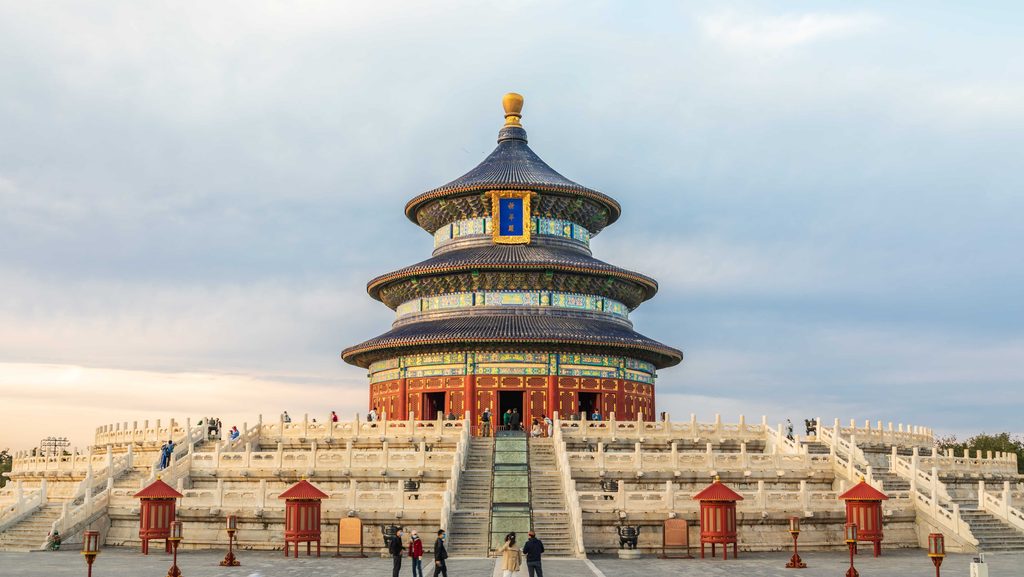
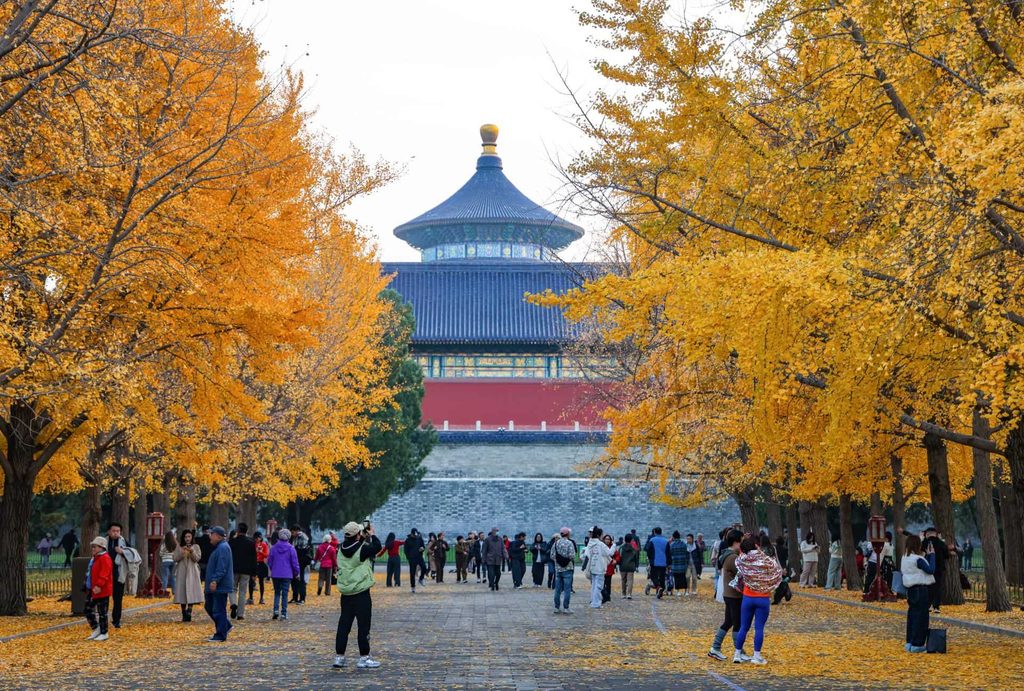
The Hall of Prayer for Good Harvests, the iconic triple-eaved building on the 100-yuan note, stands at the northern end of the park. Its 28 pillars represent the 28 constellations in ancient Chinese astronomy. The 4 central pillars symbolize the four seasons, the 12 inner pillars represent the months of the year, and the 12 outer pillars stand for the 12 traditional Chinese hours.
The Circular Mound Altar at the southern end is where emperors performed the winter solstice ceremony. Its steps and stone slabs are all multiples of nine, symbolizing the “nine levels of Heaven”. Stand on the Heavenly Heart Stone at the center, and your voice will echo back in a way that ancient rulers interpreted as a sign of heavenly approval.
The Echo Wall surrounds the Imperial Vault of Heaven. If two people stand at opposite ends of the smooth circular wall and speak softly, the sound travels clearly from one side to the other.
Tickets: The One Mistake You Cannot Afford to Make
Buy the combo ticket. Always.
This is the single most important tip for visiting the Temple of Heaven. The basic park ticket (15 RMB peak season / 10 RMB off-season) only gives you access to the park grounds. You cannot enter the Hall of Prayer for Good Harvests, Echo Wall or Circular Mound Altar without the combo ticket. There is no on-site upgrade available at the core attractions.
Combo ticket pricing:
- Peak season (April 1 – October 31): 34 RMB per person
- Off-season (November 1 – March 31): 28 RMB per person
- Free for children under 18 and adults over 60
How to book:
Search for “天坛” or “天坛公园官方服务平台” on WeChat and use the official mini-program. Be careful: the first search result is often a third-party page that bundles a “mobile audio guide” for an extra 10–20 RMB. Check your order details and remove any bundled services before paying.
Tickets require real-name reservation with your passport. Book at least one day in advance, or 3–5 days ahead during Chinese public holidays.
Important: The core attractions inside the park are closed on Mondays (except public holidays). The park itself remains open, but you cannot enter the Hall of Prayer, Echo Wall or Circular Mound Altar.
Opening Hours
| Area | Peak Season (Apr 1 – Oct 31) | Off-Season (Nov 1 – Mar 31) |
|---|---|---|
| Park gates | 6:00 – 22:00 (last entry 21:00) | 6:30 – 22:00 (last entry 21:00) |
| Core attractions | 8:00 – 18:00 (last entry 17:30) | 8:00 – 17:00 (last entry 16:30) |
The core attractions close earlier than the park gates. Even with a combo ticket, if you arrive after 5:30 PM in peak season, you will have missed your chance to enter the main buildings.
Choosing Your Gate
The Temple of Heaven has four gates. Each offers a different experience:
- East Gate (东门): Direct metro access via Line 5, Tiantan East Gate Station Exit A. This is the fastest route to the main buildings. However, it is also where most tour groups enter.
- South Gate (南门): Ideal for the traditional imperial route. Emperors entered from the south and walked north, symbolizing a journey from Earth to Heaven.
- North Gate / West Gate: Quieter, better for taxi drop-off and avoiding crowds.
Insider tip: If you want clean photos of the Hall of Prayer without crowds, enter from the North or West Gate, or arrive at the East Gate right when the core attractions open at 8:00 AM.
Suggested Routes
1.5-Hour Express Route (Best for Tight Schedules)
East Gate → Long Corridor → Hall of Prayer for Good Harvests → Imperial Vault of Heaven → Echo Wall → Circular Mound Altar → South Gate
This route covers all three core attractions in a straight line with minimal backtracking.
2–3 Hour Deep Route (Recommended)
South Gate → Circular Mound Altar → Echo Wall → Imperial Vault of Heaven → Danbi Bridge → Hall of Prayer for Good Harvests → Long Corridor → West Gate or North Gate
This route follows the traditional imperial sequence, starting from the south and moving north. The 360-meter Danbi Bridge (Sacred Way) connects the two main altar complexes and offers beautiful views of ancient cypress trees on both sides.
3-Hour Full Experience
East Gate → Long Corridor → Hall of Prayer for Good Harvests → Danbi Bridge → Echo Wall → Circular Mound Altar → Imperial Abstinence Palace → West Gate
This adds the quieter western section, including the Imperial Abstinence Palace and the Twin-Dragon Pavilion.
The Morning Culture: Tiantan’s Living Soul
Arrive before 8:00 AM and you will see a side of the Temple of Heaven that most tourists miss. The park fills with local residents practicing tai chi under ancient cypress trees, singing traditional opera, playing Chinese chess and even writing calligraphy with water on the pavement.
This is not a performance for tourists. It is daily life. The Temple of Heaven is both a UNESCO World Heritage Site and a beloved neighborhood park, and the morning atmosphere is part of what makes it special.
If you are interested in joining a tai chi class, some tour operators offer 1-hour sessions inside the park starting from the East Gate at 7:00 AM or 9:00 AM.
Night Lighting
The Hall of Prayer for Good Harvests is illuminated on Friday and Saturday evenings, as well as on major public holidays. The lighting typically runs from dusk until 9:00 PM (off-season) or 9:30 PM (peak season). The inner halls are closed at night; you can only view the illuminated exterior from the park grounds.
The blue-tiled roof glowing against the night sky is one of Beijing’s most photogenic scenes. If you have a free Friday evening, it is worth planning your visit around this.
Getting There
- By Metro: Line 5 to Tiantan East Gate Station (Exit A) for the East Gate; Line 8 to Tianqiao Station (Exit C) for the West Gate
- By Bus: Bus 202 stops at Tiantan South Gate
- By Taxi: Use the North or West Gate for easier drop-off and less congestion
- Parking: Available at the East Gate and North Gate, approximately 10 RMB per hour
What to Bring
- Passport (required for entry)
- Combo ticket reservation confirmation
- Comfortable walking shoes (the park is large, and surfaces are uneven)
- Water and snacks
- Sun protection (there is limited shade around the core buildings)
- Camera or phone for photos
Common Mistakes to Avoid
- Buying only the park ticket. You will not be able to enter the Hall of Prayer, Echo Wall or Circular Mound Altar.
- Arriving in the afternoon. The core attractions close at 6:00 PM (peak season) or 5:00 PM (off-season), and the midday heat and tour groups make the experience less pleasant.
- Visiting on a Monday. The core attractions are closed.
- Underestimating the size. The park is 273 hectares. Plan your route in advance to avoid unnecessary walking.
- Skipping the morning. The park’s local culture — tai chi, music, chess — happens before 9:00 AM and is one of the best parts of the experience.
Final Thoughts
The Temple of Heaven is not just an architectural masterpiece. It is a place where imperial history and everyday Beijing life coexist. Come early, buy the combo ticket, walk slowly and let the park reveal itself. Whether you are admiring the symmetry of the Hall of Prayer for Good Harvests or listening to your voice echo across the Circular Mound Altar, Tiantan offers a connection to Chinese cosmology and culture that few places can match.