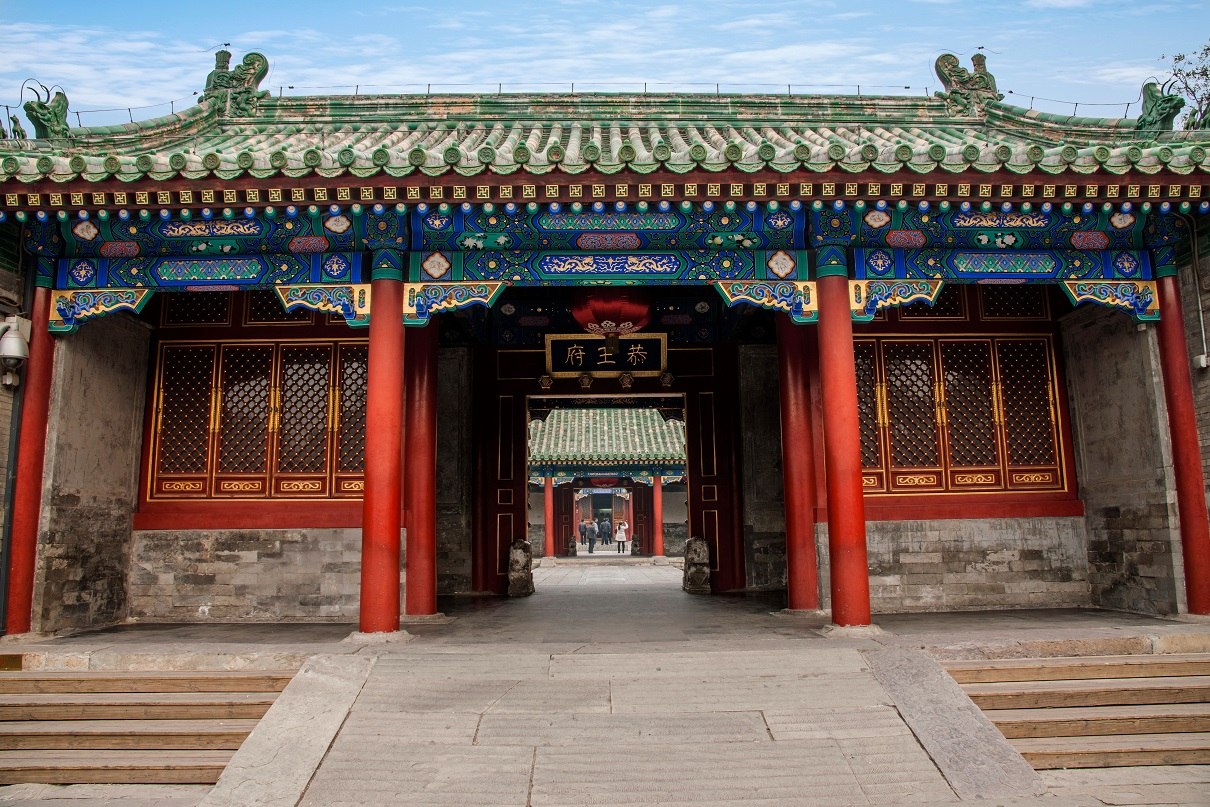
Prince Kung’s Mansion is one of the best-preserved princely residences in Beijing and one of the largest palace complexes of the Qing dynasty. It sits at the southwest corner of Shichahai in Xicheng District, tucked behind willows and narrow lanes a short walk from the lakeside. The site combines a formal residential compound at the front with a classical garden at the back, and the two halves are roughly equal in size.
The mansion is closely tied to two powerful figures: Heshen, a favored official of the Qianlong Emperor, and Prince Kung Yixin, a statesman of the late Qing court. Because it witnessed the reigns of seven Qing emperors, a common saying holds that one Prince Kung’s Mansion carries half the history of the Qing dynasty. Today it operates as a museum and a National 5A Tourist Attraction.
This guide covers what to see, how tickets and opening hours work, how to reach the mansion, suggested walking routes, and the practical details that help international visitors plan a smooth visit.
Quick Facts
- Location: No. 17 West Qianhai Street, Shichahai, Xicheng District, Beijing
- History: First built during the Qianlong reign of the Qing dynasty; sources give the construction year as 1776 or 1780, so treat the exact date as approximate
- Status: National Key Cultural Relics Protection Unit (1982), National 5A Tourist Attraction (2012), National Second-level Museum (2013)
- Area: More than 60,000 square meters, including about 32,000 square meters of residence and 28,000 square meters of garden
- Admission: Sources list RMB 40 per adult, with concessions for children, students, seniors, military personnel, veterans, and disabled visitors; confirm current rules on the official channel
- Best time: Spring and autumn for comfortable weather; early morning for fewer crowds
- Suggested duration: 2 to 4 hours
- Essential preparation: Carry your passport, check the official website for current hours and booking rules, and confirm whether advance reservation is required
Why Visit Prince Kung’s Mansion?
Few sites in Beijing let you walk through a complete Qing dynasty aristocratic compound with its original layout so clearly readable. The residence is organized along three parallel roads with five compounds, and the central road’s buildings carry green glazed tile roofs, a rank just below the imperial palace. The craftsmanship, carved details, and courtyard sequence show how rank and ritual shaped daily life at court.
The rear garden, known as Cuijin Garden, meaning the collection of all beauties, is laid out with hills on three sides and more than 40 named landscapes across its east, middle, and west roads. Winding corridors, rockeries, and ponds create the feeling of moving through a miniature mountain landscape. The garden is also home to the Stele of Fu, a celebrated inscribed stone associated with good fortune.
Four features are traditionally singled out: the Back Screen Tower, the Western-style Gate, the Grand Theatre Tower, and the Stele of Fu, described as three masterpieces and one treasure. Year-round exhibitions add depth, covering Qing mansion culture, Ming and Qing furniture, religious life, dark-red enameled pottery, and Qing history.
History-minded travelers, architecture enthusiasts, garden lovers, and photographers will all find something here. Families with older children usually manage the walking well, and the compact scale makes it an easy half-day addition to a Shichahai itinerary.
Tickets: Buy Through Official Channels and Confirm Concessions
Ticket information for Prince Kung’s Mansion is not fully consistent across sources. Most list an adult ticket at RMB 40, but concession categories and documentation requirements vary. Treat the table below as a guide and verify current prices and eligibility on the official website or at the ticket office before you travel.
| Visitor category | Reported price or rule | Notes |
|---|---|---|
| Adult | RMB 40 | Most commonly cited price; confirm current rate |
| Children under 120 cm | Free | Height-based exemption reported by multiple sources |
| Children aged 6 or younger | Free | Reported by Beijing Tourism; may require ID |
| Minors aged 6 to 18 | Half price | Valid identity document usually required |
| Full-time undergraduate students | Half price | Graduate students generally excluded; bring student ID |
| Seniors and active-duty military | Half price | Valid certificate required |
| Retired veterans and disabled visitors | Free | Free tickets may be collected at the Tourist Center with a valid certificate |
Some third-party sellers describe time-slotted tickets and real-name admission, with paper tickets collected on site using a passport. These details are not confirmed by an official source, so check the official website before relying on them. If advance booking is required during busy periods, use the official channel rather than an unofficial reseller.
Avoid scalpers and touts outside the entrance. Buy only from official counters or authorized platforms, keep your passport with you, and confirm whether your ticket is tied to a specific entry window.
Opening Hours: Seasonal Schedules and Monday Closures
Opening hours differ between sources, especially for the winter season and last entry. The mansion is generally closed on Mondays except during national holidays, but seasonal times should be confirmed before visiting.
| Season | Reported hours | Last entry | Source note |
|---|---|---|---|
| March 15 to October 31 | 8:00 to 17:00 | Not specified | China Daily listing |
| November 1 to March 14 | 9:00 to 16:00 | Not specified | China Daily listing |
| April to October | 8:00 to 18:30 | No admission after 17:00 | Updated China Daily listing |
| November to March | 9:00 to 18:00 | No admission after 16:00 | Updated China Daily listing |
| Year-round listing | 8:30 to 17:00 | Last entry 16:10 | Beijing Tourism and Outdooractive |
Because the sources conflict, plan to arrive well before the earliest reported last-entry time. Check the official website or call ahead on the day of your visit, particularly around public holidays when hours may be extended or adjusted.
Allow extra time for security checks at the entrance. Large bags and prohibited items may be restricted, so travel light and follow staff instructions.
Getting There
The mansion is in a dense historic neighborhood where walking is often faster than driving. Public transport is the most reliable option.
Metro
Metro Line 6 serves Beihai North station, which is the most commonly cited stop for the mansion. From there, the walk through the surrounding lanes takes roughly 10 to 15 minutes. Exit details vary between sources, so follow signage or ask station staff rather than relying on a specific exit number.
Bus
Several bus routes stop near Beihai North Gate, including routes 3, 13, 42, 107, 111, 118, and 612 according to various listings. Route numbers and stop names change over time, so check a current transit app before you go.
Taxi and Ride-Hailing
A taxi or ride-hailing car can drop you near the Shichahai area, but narrow hutongs may limit where vehicles can stop. Set your destination to a nearby main road and walk the final stretch.
Driving and Parking
Driving is not recommended. Parking around the mansion is limited and the surrounding lanes are congested. If you must drive, expect to park some distance away and walk.
Insider Tip
Combine the mansion with a lakeside walk along Shichahai. The area preserves some of old Beijing’s hutong atmosphere, and the stroll makes a pleasant buffer before or after your timed entry.
Suggested Routes
Classic Half-Day Route
Duration: About 3 hours. Start: Main entrance. End: Rear garden exit.
Main gate → Yin’an Hall → Jiale Hall → Back Screen Tower → Western-style Gate → Grand Theatre Tower → Cuijin Garden → Stele of Fu
Terrain: Mostly flat courtyards with some steps and uneven paving in the garden. Suitable for most visitors.
History-Focused Route
Duration: About 2.5 hours. Start: Main gate. End: Exhibition halls.
Main gate → central road halls → mansion culture exhibition → Qing history displays → furniture exhibition → rear garden
Terrain: Flat indoor and outdoor sections with benches in the courtyards.
Garden and Photography Route
Duration: About 2 hours. Start: Rear garden entrance. End: Lakeside exit.
Cuijin Garden east road → central rockeries → pond area → Stele of Fu → west road corridors → exit toward Shichahai
Terrain: Winding paths, rockeries, and some stairs. Wear shoes with good grip.
Family-Friendly Short Route
Duration: About 1.5 hours. Start: Main gate. End: Garden rest area.
Main gate → Yin’an Hall → courtyard walk → garden pond → shaded corridor rest stop → exit
Terrain: Short and mostly flat, with frequent places to sit.
Must-See Highlights
Yin’an Hall
This ceremonial hall on the central road anchors the residence’s formal spaces. Its scale and green glazed roof signal the mansion’s high rank. Visit early for clearer views before tour groups arrive.
Jiale Hall
Associated with sacrificial and ritual life, this hall helps explain how a princely household functioned. Read the display panels for context before moving on.
Back Screen Tower
A long two-story rear building, roughly 160 meters long, closes off the residential compound. Its repeated windows and layered structure make it one of the mansion’s most photographed features.
Western-style Gate
An unusual European-influenced structure within a Chinese garden setting, it reflects the late Qing interest in foreign design. Look closely at the carved details.
Grand Theatre Tower
This performance space shows how opera and entertainment formed part of aristocratic life. Check whether interior access is open on the day of your visit.
Stele of Fu
The inscribed stone is linked to good fortune and is one of the mansion’s most celebrated objects. Expect crowds around it and wait for a clear moment to view it.
Cuijin Garden
The rear garden’s hills, ponds, and corridors create a compact landscape of more than 40 named scenes. Slow down here and follow the side paths.
Exhibition Halls
Rotating and permanent displays cover furniture, religious life, and Qing history. They offer a useful indoor break in hot or cold weather.
Best Time to Visit
Spring and autumn bring the most comfortable temperatures, and April, May, September, and October are often recommended. Summer is hot and humid, so start early and carry water. Winter is quieter but cold, and some garden plants are dormant.
Morning is generally the best time of day for fewer crowds and softer light in the courtyards. The garden is especially pleasant in late afternoon, but check last-entry times carefully.
Avoid major Chinese public holidays such as National Day week and Lunar New Year, when domestic crowds peak. If you visit during a holiday, book ahead and arrive at opening time.
The mansion is not generally described as a night-visit site, so plan your day around daylight hours and confirm any special evening openings on the official channel.
Common Mistakes to Avoid
- Assuming Monday opening. The mansion is usually closed on Mondays except during national holidays. Check the calendar before planning your day.
- Relying on outdated hours. Sources conflict on seasonal times and last entry. Confirm on the official website on the day of your visit.
- Arriving without a passport. Real-name admission and paper ticket collection may require your passport. Carry it at all times.
- Buying from scalpers. Use official counters or authorized platforms only, and avoid touts near the entrance.
- Underestimating walking time. The site covers more than 60,000 square meters. Wear comfortable shoes and allow 2 to 4 hours.
- Rushing the garden. The rear garden rewards slow exploration. Do not treat it as a quick photo stop.
- Ignoring security checks. Allow extra time at the entrance and avoid carrying prohibited items.
- Visiting at midday in summer. Heat and crowds peak in the middle of the day. Start early instead.
- Forgetting mobile payment setup. Many nearby shops and cafes rely on mobile payment. Set up a payment app before you arrive.
- Driving into the hutongs. Parking is limited and lanes are narrow. Use metro or taxi instead.
- Missing the exhibitions. The displays add important context. Check which halls are open during your visit.
- Assuming all areas are accessible. Some garden paths and upper floors may have steps or limited access. Ask staff if you have mobility needs.
What to Bring
- Passport for ticket collection and identity checks
- Comfortable walking shoes with good grip
- Water bottle, especially in summer
- Sun hat and sunscreen in warm months
- Light rain jacket in spring and summer
- Warm layers in winter
- Mobile phone with a payment app set up
- Portable charger for navigation and tickets
- Small bag that is easy to carry through security
- Cash in RMB as a backup
- Camera or phone for garden photography
- A lightweight map or downloaded offline guide
Food and Drink Nearby
The Shichahai and Houhai area has a wide range of dining options within walking distance of the mansion. Exact businesses change frequently, so treat the following as reliable dining areas rather than fixed recommendations.
- Huguosi Snack Street area: About a 10 to 15 minute walk. Budget-friendly. Known for Beijing snacks such as fried sauce noodles, glutinous rice rolls, and fermented mung bean drink.
- Houhai lakeside: About a 10 to 20 minute walk. Mid-range. Restaurants and cafes with lake views, plus bar street options in the evening.
- Shichahai hutong lanes: Immediately surrounding the mansion. Budget to mid-range. Small local eateries serving noodles, dumplings, and grilled snacks.
- Beihai North area: Near the metro station. Budget to mid-range. Convenient stops for a quick meal before or after your visit.
For a more structured meal, the Shichahai hutong tour route links time-honored restaurants and teahouses in the area. Confirm opening hours and whether reservations are needed, especially on weekends.
Final Thoughts
Prince Kung’s Mansion offers a compact, readable slice of Qing dynasty life, from ceremonial halls to a garden designed as a miniature landscape. Plan for two to four hours, arrive early, and confirm tickets and hours on the official channel before you go. The most memorable moment is often quiet: standing in the rear garden as willow shadows move across the Stele of Fu, with the noise of Shichahai fading behind the walls.
Sources
- China Daily: The Prince Kung's Mansion
- China Daily: The Prince Kung's Mansion (updated)
- Beijing Tourism: Prince Kung's Mansion
- Beijing Tourism: Prince Kung's Mansion (alternate page)
- Trip.com: Prince Kung's Mansion travel tips
- Trip.com: Prince Kung's Mansion and Houhai route
- Marriott Activities: Prince Gong's Mansion entry ticket
- Marriott Activities: Prince Gong's Mansion ticket booking
- Marriott Activities: Experience Prince Kung's Mansion
- Viator: Prince Kung's Mansion ticket