The Altar of Land and Grain, known in pinyin as Shejitan, is a three-tiered square marble altar inside Zhongshan Park in central Beijing. For roughly five centuries during the Ming and Qing dynasties, emperors came here to sacrifice to the gods of land and grain, the deities believed to guarantee the harvest and the well-being of the empire. The altar sits just west of Tiananmen Square and forms part of the Beijing Central Axis, which was inscribed on the UNESCO World Heritage List in 2024.
What survives today is a compact but layered site: the five-color soil altar, the timber Hall of Worship, the surrounding walls with glazed bricks in four directions, and the service buildings where offerings were prepared. The park around it, renamed Zhongshan Park in 1928 to honor Sun Yat-sen, is one of the oldest imperial gardens opened to the public in Beijing.
This guide covers the history behind the Altar of Land and Grain, what to see, how to reach it, suggested routes, ticket and opening-hour advice, and the practical details international visitors should confirm before setting out.
Quick Facts
| Item | Detail |
|---|---|
| Location | Inside Zhongshan Park, west of Tiananmen Square, Dongcheng District, central Beijing |
| History | Built in 1421 under the Ming Yongle emperor; used for imperial sacrifices to the gods of land and grain during the Ming and Qing dynasties |
| Status | Historic imperial altar within a public park; part of the Beijing Central Axis UNESCO World Heritage property (inscribed 2024) |
| Area | The historic altar grounds occupied about 360 mu (roughly 24 hectares); the altar platform itself is small and compact |
| Admission | Park entry ticket required; price and any combined ticket options should be checked on the official channel before visiting |
| Best time | Spring and autumn for mild weather; early morning for fewer crowds |
| Suggested duration | 1 to 2 hours for the altar and park highlights; half a day if combined with Tiananmen Square or the Forbidden City |
| Essential preparation | Carry your passport, expect security checks near Tiananmen, and confirm current hours and booking rules in advance |
Why Visit the Altar of Land and Grain?
The altar is the only one in Beijing dedicated to both the god of land and the god of grain, which made it one of the most sacred ceremonial sites of imperial China. Its design encodes a complete cosmology. The square platform represents the ancient belief that the earth is square, and the surface is covered with five kinds of colored earth: yellow at the center, green in the east, red in the south, white in the west, and black in the north. These colors correspond to the five elements and the five directions, and the earth itself was received as tribute from across the empire.
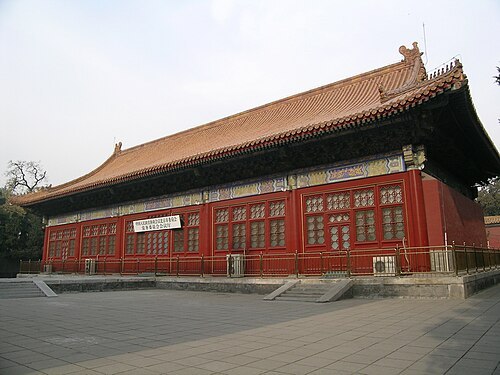
The surrounding low red walls are set with glazed bricks in four colors marking the cardinal directions, and each side of the innermost Altar Wall has a white marble gate. To the north stand the Hall of Worship and the Halberd Gate. The Hall of Worship is built entirely of wood, with an exposed ceiling structure often described as one of the finest examples of classical architecture in Beijing. Sun Yat-sen’s coffin was kept there temporarily after his death in 1925, and the hall was renamed Zhongshan Hall in 1928.
History-minded travelers, architecture enthusiasts, and anyone exploring the Central Axis on foot will find the site rewarding. It is also a calm counterpoint to the crowds at Tiananmen Square, with centuries-old cypress trees and quiet courtyards.
Tickets: Buy Through Official Channels and Carry Your Passport
Entry to the altar is through Zhongshan Park, so you need a park ticket rather than a separate altar ticket. Sources do not provide a reliable current price, and third-party passes sold online may bundle priority entry with other services. Treat any price you see as indicative and confirm the current fee, concession rules, and whether advance reservation is required on the official park channel before you travel.
| Ticket type | What it covers | Price and booking notes |
|---|---|---|
| Zhongshan Park general entry | Includes access to the altar area | Check the official channel; not confirmed in the available sources |
| Concessions | Discount categories are not verified here | Ask at the gate or check official notices |
| Advance booking | May be required on busy dates | Verify the official booking window |
| Identification | A real passport is required for foreign visitors | The name and passport number must match exactly when booking online |
| Payment | Mobile payment is common in China | Keep a card and some cash as backup |
Book only through official park channels or reputable platforms, and avoid touts selling tickets near Tiananmen. Scalpers and unofficial guides may offer entry at inflated prices, and tickets tied to a passport name cannot simply be transferred.
Opening Hours
Zhongshan Park generally operates on daytime hours, but seasonal schedules and last-entry times are not confirmed in the available sources. The altar area may close earlier than the wider park, and holiday adjustments are common. Check the official channel on the day of your visit.
| Season or venue | Typical pattern | What to verify |
|---|---|---|
| Spring and summer | Longer daytime hours are typical | Confirm exact opening and last entry |
| Autumn and winter | Shorter daytime hours are typical | Confirm closing time before a late-afternoon visit |
| Altar and halls | Inner buildings may keep different hours from the park | Check on arrival |
| Public holidays | Extended or adjusted hours are possible | Expect larger crowds and security queues |
| Closure days | No regular closure day is confirmed | Verify before traveling on a Monday or major holiday |
Getting There
The park entrance is on the west side of Tiananmen Square, an area served by central Beijing’s metro network. The nearest stations are around Tiananmen West and Tiananmen East on Line 1, but exact exits and walking routes change with security arrangements, so follow signs and allow extra time. Taxis and ride-hailing can drop you near the square, though vehicles cannot stop directly at the gate. Driving is not recommended because parking in the area is limited and restricted.
Security checks are routine around Tiananmen Square. Carry your passport, avoid prohibited items, and expect bag screening. The west gate of Zhongshan Park is the usual access point for visitors arriving from the square.
Insider tip: arrive early in the morning, when security lines are shorter and the cypress-lined paths are quiet, then walk to the altar before tour groups arrive.
Suggested Routes
| Route | Duration | Best for | Terrain |
|---|---|---|---|
| Altar Focus Route | 45 to 60 minutes | History and architecture | Flat paved paths, a few steps |
| Zhongshan Park Loop | 1.5 to 2 hours | Gardens and photography | Flat, some uneven stone |
| Central Axis Half Day | 3 to 4 hours | Context and city history | Mostly flat, long walking distances |
| Imperial Rituals Route | 2 to 3 hours | Ritual and ceremonial history | Flat with stairs at the altar |
Altar Focus Route
Duration: 45 to 60 minutes. Start and end: Zhongshan Park west gate. Sequence: West gate → Altar Wall gates → five-color soil altar → Hall of Worship (Zhongshan Hall) → Halberd Gate → exit. Terrain: flat paved paths with a few steps at the altar. This route concentrates on the ceremonial core and suits visitors with limited time.
Zhongshan Park Loop
Duration: 1.5 to 2 hours. Start and end: West gate. Sequence: West gate → altar → Hall of Worship → cypress groves → garden areas → exit. Terrain: flat, with some uneven historic stone. Add this loop if you want the park’s trees and quieter corners alongside the altar.
Central Axis Half Day
Duration: 3 to 4 hours. Start and end: Tiananmen West area to the Forbidden City approach. Sequence: Tiananmen Square → Zhongshan Park west gate → Altar of Land and Grain → Hall of Worship → exit → Tiananmen area. Terrain: mostly flat but long walking distances and security checks. This route places the altar in the wider story of the Central Axis.
Imperial Rituals Route
Duration: 2 to 3 hours. Start and end: West gate. Sequence: West gate → Altar Wall → five-color altar → Hall of Worship → sacred storehouse and kitchen area → Slaughter Pavilion → Lingxing Gate → Gate of Safeguarding Peace and Sun Yat-sen statue → exit. Terrain: flat with stairs at the altar. Follow the ceremonial sequence once used by emperors to understand how offerings were prepared and presented.
Must-See Highlights
- Five-color soil altar: The square, three-tiered platform rises 1.3 meters and is covered in earth of five colors. Look for the directional logic and the four stone staircases, one on each side.
- Altar Wall and glazed brick walls: Low red walls set with glazed bricks in four colors mark the cardinal directions, with a white marble gate on each side of the inner wall.
- Hall of Worship (Zhongshan Hall): The all-wood hall has an exposed ceiling structure and once sheltered emperors during sacrifices. Sun Yat-sen’s coffin rested here in 1925.
- Halberd Gate: The gate between the altar wall and the northern outer wall frames the ceremonial approach.
- Sacred storehouse and kitchen: On the west side, these service buildings show where offerings were stored and prepared.
- Slaughter Pavilion: The pavilion for sacrificial animals completes the ritual infrastructure and is easy to miss.
- Lingxing Gate: The ceremonial gate and enclosing walls help explain the site’s processional layout.
- Gate of Safeguarding Peace and Sun Yat-sen statue: A modern memorial point that connects the imperial altar to republican history.
- Ancient cypress trees: Centuries-old trees give the park its atmosphere and make a quiet contrast to the square outside.
Best Time to Visit
Spring and autumn bring mild temperatures and the most comfortable walking conditions. Summer is hot and humid, so early morning is best. Winter is cold but often clear, and the bare cypress branches make the altar’s geometry easier to read. The altar is a daytime site; night access is not confirmed, so plan around daylight.
Weekday mornings are usually quieter than weekends. Avoid Chinese public holidays such as National Day in early October and the Spring Festival period, when Tiananmen-area security and crowds increase sharply. If you visit during a holiday, arrive at opening time and keep bags light for security checks.
Common Mistakes to Avoid
- Assuming the altar has its own ticket. Entry is through Zhongshan Park; buy the park ticket and confirm what it covers.
- Forgetting your passport. Foreign visitors need a real passport, and online bookings must match the name and number exactly.
- Relying on a third-party pass without checking. Verify what a priority pass includes and whether official entry is simpler.
- Arriving without checking hours. Seasonal schedules and last entry vary; confirm on the official channel.
- Underestimating security queues. The Tiananmen area has routine screening; allow extra time.
- Carrying prohibited items. Leave restricted equipment and unnecessary bags behind to speed up checks.
- Treating the altar as a quick photo stop. The walls, halls, and service buildings carry most of the story; allow at least an hour.
- Missing the service buildings. The storehouse, kitchen, and Slaughter Pavilion explain how sacrifices were prepared.
- Visiting at midday in summer. Heat and crowds peak then; go early instead.
- Ignoring the Central Axis context. Pair the altar with nearby sites to understand its place in the city plan.
- Expecting English signage throughout. Bring a translation app or a guidebook for the smaller structures.
- Buying from touts. Use official channels and avoid unofficial sellers near the square.
What to Bring
- Passport for entry and security checks
- Comfortable walking shoes for flat but long paths
- Mobile phone with a translation app and mobile payment set up
- Small day bag that is easy to screen at security
- Water bottle, especially in summer
- Sun hat and sunscreen in warm months
- Light jacket in spring and autumn
- Warm layers and gloves in winter
- Camera or phone for the altar’s colored earth and walls
- Cash or a bank card as backup for payment
Food and Drink Nearby
Dining options near Tiananmen are concentrated in the surrounding commercial streets and shopping areas rather than inside the park. The following are reliable areas rather than specific verified venues; check opening hours and prices on arrival.
- Qianmen Street area: about 1.5 kilometers south of the square, with a mix of casual restaurants and snack shops at moderate prices.
- Wangfujing area: east of the Forbidden City, with food halls and chain restaurants at mid-range prices.
- Xidan area: west of the square, with shopping-mall dining and fast food at moderate prices.
- Park kiosks: small snack and drink stands may operate inside Zhongshan Park; availability varies by season.
Final Thoughts
The Altar of Land and Grain is a small site with a large idea at its center: an empire’s harvest, rendered in five colors of earth. Allow one to two hours, or half a day if you link it to Tiananmen Square and the Central Axis. Confirm tickets and hours on the official channel, carry your passport, and arrive early. Stand at the edge of the square platform and look for the yellow earth at the center, then the green, red, white, and black edges: a cosmology you can read in a single glance.
Sources
- China.org.cn: Eight Ancient Altars in Beijing
- China.org.cn: Top 10 Historic Sites Along Beijing Central Axis
- GetYourGuide: Zhongshan Park and Imperial Altar Pass
- Shanghai Daily: Imperial Temples, Altars Dot Beijing
- GetYourGuide: Zhongshan Park and Imperial Altar Pass (alternate listing)
- Wikipedia (Italian): Shejitan di Pechino
- Peking University SIS: Ancestral Temple and Altar of Land and Grain Tour
- Clic A Tour: Zhongshan Park and Imperial Altar Pass listing
- Wikiital (Portuguese): Shejitan de Pequim