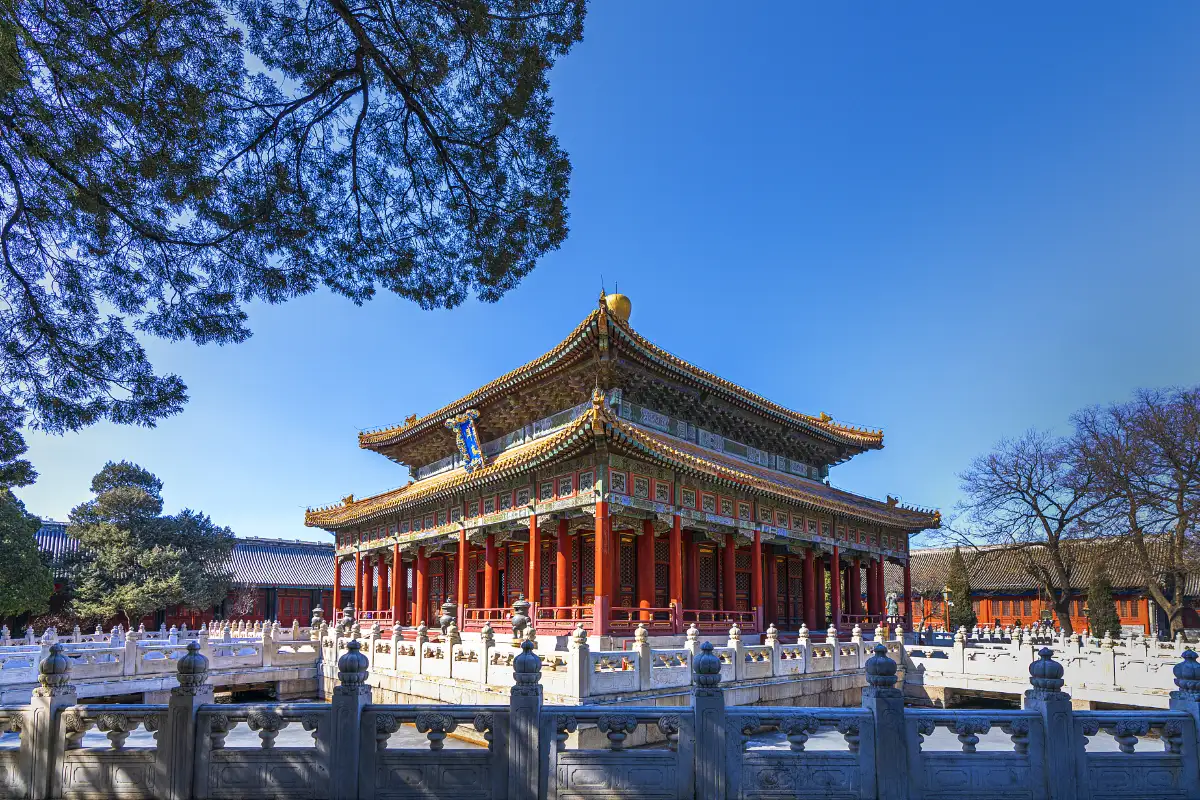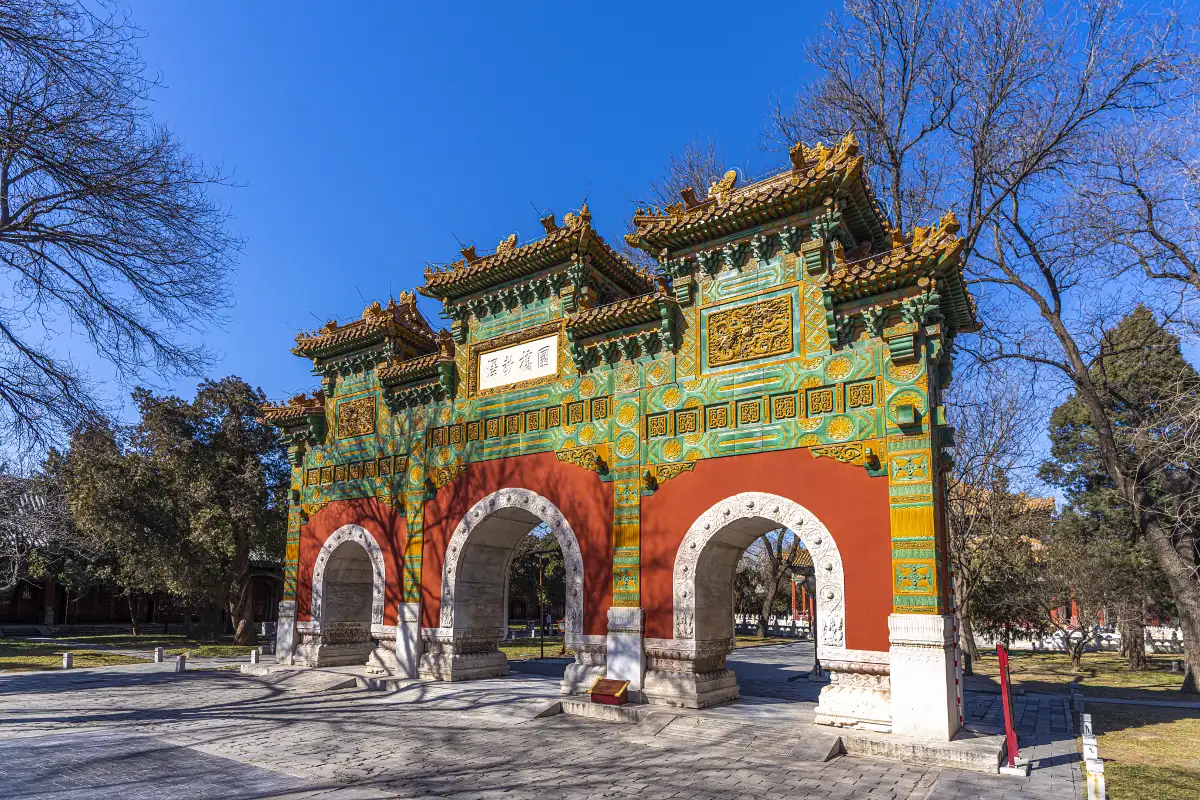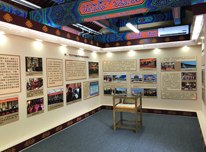
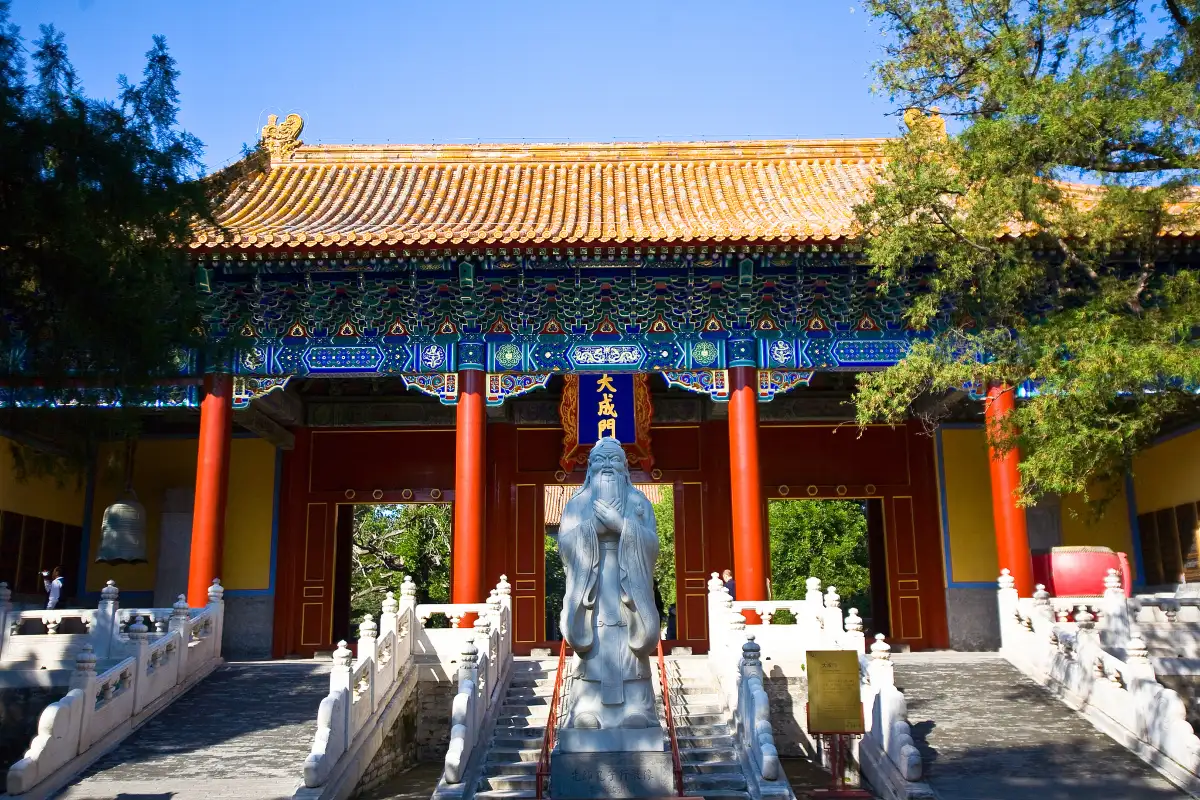
The Beijing Confucius Temple and Imperial College Museum brings together two connected complexes in the old inner city of Dongcheng District. The Confucius Temple was the imperial site for sacrifices to Confucius during the Yuan, Ming, and Qing dynasties. Next door, the Imperial College, known as Guozijian, was the highest institution of learning in imperial China.
Together they preserve a rare “temple on the left, school on the right” layout, a plan that dates back more than 700 years. You can walk from courtyards of ancient cypresses and stone steles into the halls where emperors lectured and scholars studied. The site sits on Guozijian Street, next to Yonghe Temple and within easy reach of the Yonghegong metro station.
This guide covers what to see, how to buy tickets, when to go, how to get there, and the walking routes that make the most of a visit. It also flags which details are time-sensitive so you can confirm them on the official channel before you travel.
Quick Facts
| Location | Guozijian Street, Dongcheng District, Beijing, beside Yonghe Temple |
|---|---|
| History | Founded in the Yuan dynasty; used for imperial sacrifices and higher education through the Ming and Qing dynasties |
| Status | Museum combining the Confucius Temple and the Imperial College |
| Area | Confucius Temple about 22,000 square meters; Imperial College more than 27,000 square meters |
| Admission | Adult tickets are commonly reported at RMB 30; confirm current pricing and concessions on the official channel |
| Best time | Spring and autumn for comfortable walking; weekday mornings for quieter courtyards |
| Suggested duration | 2 to 3 hours for the main halls and steles |
| Essential preparation | Carry your passport, check opening hours and booking rules in advance, and set up a mobile payment app |
Why Visit the Beijing Confucius Temple and Imperial College Museum?
Few sites in Beijing connect ritual and education so directly. The Confucius Temple was where emperors honored Confucius, while the Imperial College trained and administered the scholars who ran the imperial bureaucracy. The two complexes share walls and gates, so you can follow the relationship between state ritual and state learning in a single walk.
The architecture is restrained rather than flashy. Dacheng Hall, the core of the temple, has a gold-brick floor and a dragon-patterned imperial path, with tablets of Confucius and his disciples inside. The Imperial College adds the Liuli Archway, described as Beijing’s only archway built specifically for education, and Biyong Hall, a square hall surrounded by water where emperors lectured.
The stele forest is the emotional center for many visitors. Nearly 200 steles record the names, hometowns, and rankings of more than 51,000 successful candidates from the Yuan, Ming, and Qing dynasties. History-minded travelers, architecture fans, students, and families with older children will find plenty here. Anyone seeking a calm counterpoint to the crowds at Yonghe Temple will also appreciate the shaded courtyards.
Tickets: Book Through the Official Channel and Avoid Scalpers
Adult admission is widely reported at RMB 30, with half price for students and free entry for some age groups. These figures come from third-party travel accounts rather than a confirmed official notice, so treat them as indicative. Check the official WeChat account or the museum’s official channel for the current price, concession rules, and whether advance booking is required.
| Ticket type | Reported price | Notes |
|---|---|---|
| Adult | RMB 30 | Confirm on the official channel before visiting |
| Students | Half price | Bring valid student identification |
| Under 18 and over 60 | Free | Reported policy; verify eligibility and ID requirements |
| Advance booking | Check the official channel | Some accounts mention booking through the official WeChat account |
Some visitor accounts mention a free-entry quota on Wednesdays for the first 200 people, with reservation required. This is not confirmed by an official source, so do not plan around it without checking. Third-party platforms sell admission with a QR code, but buying direct is usually simpler and avoids markup.
Carry your passport, since foreign visitors may need it for identity checks or ticket collection. Avoid touts outside the entrance offering “fast entry” or discounted tickets. If a reseller cannot show an official booking confirmation, walk away and use the official channel.
Opening Hours
Opening hours are time-sensitive and the sources do not give a consistent official schedule. Third-party ticket listings mention morning entry from 09:00 to 12:00 and afternoon entry from 12:00 to 16:30, but these are operator listings rather than museum notices. Confirm the day’s hours, last entry time, and any holiday adjustments before you go.
| Period or category | Reported hours | Advice |
|---|---|---|
| Standard days | Check the official channel | Third-party listings suggest roughly 09:00 to 16:30 |
| Last entry | Check the official channel | Arrive well before the stated closing time |
| Public holidays | Usually adjusted | Expect crowds and confirm any schedule changes |
| Monday closure | Not confirmed | Do not assume the site is open every day |
The Confucius Temple and Imperial College are connected, so one ticket normally covers both. Still, individual halls or exhibition rooms may close for conservation or events. Ask at the entrance which sections are open that day.
Getting There
The most reliable approach is by metro. Yonghegong Station on Lines 2 and 5 is the nearest stop, and visitor accounts describe a walk of roughly 700 meters from Exit G to the site. Exit G is reported as the southwest exit; confirm the correct exit on station signage, since exit labeling can change.
From the station, walk south along Yonghegong Street and turn toward Guozijian Street at the Chengxian Street archway. The route passes shops and old alleyways, so allow extra time if you want to browse. Several bus routes also serve stops near Yonghe Temple and Fangjia Hutong, but route numbers and stop names should be checked on a current map.
Taxis and ride-hailing are convenient but drop-off points near the narrow street can be restricted. Driving is not recommended because parking in the surrounding hutongs is limited. If you arrive by car, plan to park in a commercial lot and walk.
Insider tip: Visit on a weekday morning and pair the museum with Yonghe Temple next door. The two sites are close enough to combine, but the temple draws larger crowds, so start at the Confucius Temple while the courtyards are quiet.
Suggested Routes
| Route | Duration | Best for | Terrain |
|---|---|---|---|
| Highlights Route | 2 hours | First-time visitors | Flat courtyards and stone paving |
| Scholars’ Route | 3 hours | History and exam-culture fans | Flat, with some steps at halls |
| Architecture Route | 2.5 hours | Photographers and design lovers | Flat, shaded by cypresses |
| Family Route | 1.5 hours | Families with older children | Flat and stroller-friendly in main areas |
Highlights Route
Duration: About 2 hours. Start: Confucius Temple main gate. End: Biyong Hall exit.
First Teacher Gate → Dacheng Gate → Dacheng Hall → Stele Forest → Liuli Archway → Biyong Hall. The terrain is flat stone paving with a few thresholds. This route covers the essential halls and the most photographed archway without rushing.
Scholars’ Route
Duration: About 3 hours. Start: Stele Forest. End: Yilun Hall.
Stele Forest → Dacheng Hall → Chongsheng Shrine → Jingjing Gate → Liuli Archway → Biyong Hall → Yilun Hall. The terrain is flat, with steps at some hall entrances. Spend time reading the stele inscriptions and look for names of famous officials and scholars.
Architecture Route
Duration: About 2.5 hours. Start: Dacheng Gate. End: Guozijian Street.
Dacheng Gate → Dacheng Hall → Stone Drums → Liuli Archway → Biyong Hall → Guozijian Street. The route is flat and mostly shaded. It focuses on roof lines, glazed tiles, and the contrast between temple and college architecture.
Family Route
Duration: About 1.5 hours. Start: Confucius Temple entrance. End: Biyong Hall.
First Teacher Gate → Dacheng Hall → Stele Forest → Liuli Archway → Biyong Hall. The terrain is flat and manageable for strollers in the main courtyards. Keep the pace short and let children look for familiar names on the steles.
Must-See Highlights
- Dacheng Hall: The ceremonial heart of the temple, with a gold-brick floor and dragon-patterned imperial path. Look for the tablets of Confucius and the Four Sages and Twelve Philosophers. Arrive early for quieter viewing.
- Stele Forest: Nearly 200 steles list more than 51,000 successful imperial examination candidates. The stones record names, hometowns, and rankings. Allow time to read a few inscriptions closely.
- Liuli Archway: A glazed-tile archway inside the Imperial College, described as Beijing’s only archway built for education. Inscriptions on both sides are attributed to Emperor Qianlong.
- Biyong Hall: A square hall surrounded by water where emperors lectured. The layout symbolizes order and learning, and the interior includes a recreated lecture scene.
- Stone Drums: Ten stone drums under the Dacheng Hall corridor are engraved with ancient hunting poems. They are replicas, but they illustrate the deep history of the site.
- Ancient Cypresses: More than 40 old trees stand in the Imperial College, including the Auspicious Locust and the Luo Guo Locust. They give the courtyards their calm atmosphere.
- Qianlong Thirteen Classics Stele: A set of stone tablets inscribed with Confucian classics, displayed in the alley between the temple and college. It is a key stop for understanding Confucian scholarship.
- Guozijian Street: The surrounding lane is lined with old walls, shops, and tea houses. Walk it after your visit for a sense of the old city.
Best Time to Visit
Spring and autumn offer the most comfortable weather for walking between courtyards. Autumn is especially atmospheric, with ginkgo leaves turning yellow against the red walls and green cypresses. Summer can be hot and humid, so visit in the morning and carry water.
Weekday mornings are usually quieter than weekends and public holidays. Around September 28, Confucius’s birthday, the museum may hold commemorative ceremonies with music and ritual dances. These events add atmosphere but also draw crowds, so check the schedule if you want a quiet visit.
Chinese public holidays, including National Day in early October and the Spring Festival period, bring heavy domestic travel. Expect longer lines and busier courtyards. The site is generally a daytime attraction, and the sources do not confirm regular night access, so plan to finish before late afternoon.
Common Mistakes to Avoid
- Assuming the ticket price is fixed. Prices and concessions can change. Check the official channel before you travel.
- Arriving without a booking. Some periods may require advance reservation. Confirm the rule and book early if needed.
- Using the wrong metro exit. Exit G at Yonghegong is commonly cited, but confirm on station signage.
- Rushing the stele forest. The inscriptions are the historical core of the site. Give them at least 20 minutes.
- Visiting only the temple. The Imperial College next door is included and holds the Liuli Archway and Biyong Hall.
- Ignoring holiday crowds. Public holidays can be extremely busy. Visit on a weekday if possible.
- Forgetting your passport. Foreign visitors may need identification for tickets or checks.
- Relying on cash only. Mobile payment is common in Beijing. Set up a payment app before arrival.
- Buying from touts. Use the official channel or a reputable platform. Avoid unsolicited offers outside the gate.
- Wearing smooth-soled shoes. Stone paving can be slippery after rain. Wear comfortable shoes with grip.
- Expecting late opening. The site is a daytime attraction. Do not plan an evening visit without confirming.
- Skipping Guozijian Street. The lane outside is part of the experience. Allow time for a short walk.
What to Bring
- Passport or government-issued photo ID
- Comfortable walking shoes with grip
- Water bottle, especially in summer
- Sun hat and sunscreen in warm months
- Light rain jacket in spring and summer
- Warm layer in late autumn and winter
- Mobile phone with a payment app set up
- Small bag for camera or notebook
- Cash in RMB as a backup
- Printed or saved copy of your booking confirmation
Food and Drink Nearby
Guozijian Street and the surrounding hutongs have tea houses, cafes, and small snack shops. Exact businesses change often, so treat the following as reliable areas rather than fixed recommendations.
- Guozijian Street: Tea houses and cafes within a short walk of the museum. Expect light snacks and drinks at moderate prices.
- Yonghegong Street: A busy commercial strip near the metro station with noodle shops and bakeries. Good for a quick meal before or after your visit.
- Guijie (Ghost Street): About 1 kilometer east, known for late-night dining and spicy dishes. Prices vary by venue.
- Yaoji Fried Liver, Yonghe Temple branch: A long-established Beijing brand serving fried liver and steamed buns, with a reported cost of about RMB 25 per person. Confirm current hours and prices.
- Fangjia Hutong area: A quieter pocket with small cafes and local eateries, a short walk from the museum.
Final Thoughts
The Beijing Confucius Temple and Imperial College Museum rewards a slow visit. In two to three hours you can move from the stele forest to Dacheng Hall, then through the Liuli Archway to Biyong Hall. The site is compact, flat, and easy to combine with Yonghe Temple.
Check the official channel for current tickets and hours, carry your passport, and arrive on a weekday morning if you can. The most memorable moment is often simple: standing in the stele forest, reading a name carved centuries ago, while cypress shadows move across the stone.
Sources
- Trip.com travel guide to the Confucius Temple and Imperial College Museum
- Trip.com moments guide to the Beijing Confucius Temple
- Trip.com moments guide to the Imperial College
- Trip.com visitor account of the temple and college complex
- Over The Planet ticket listing for the museum
- Planet of Hotels listing for a nearby hotel
- Lokalee ticket listing for the museum
- Viator partner ticket listing for the museum
- La Vacanza Travel ticket listing for the museum
- FunEx ticket listing referencing the museum