
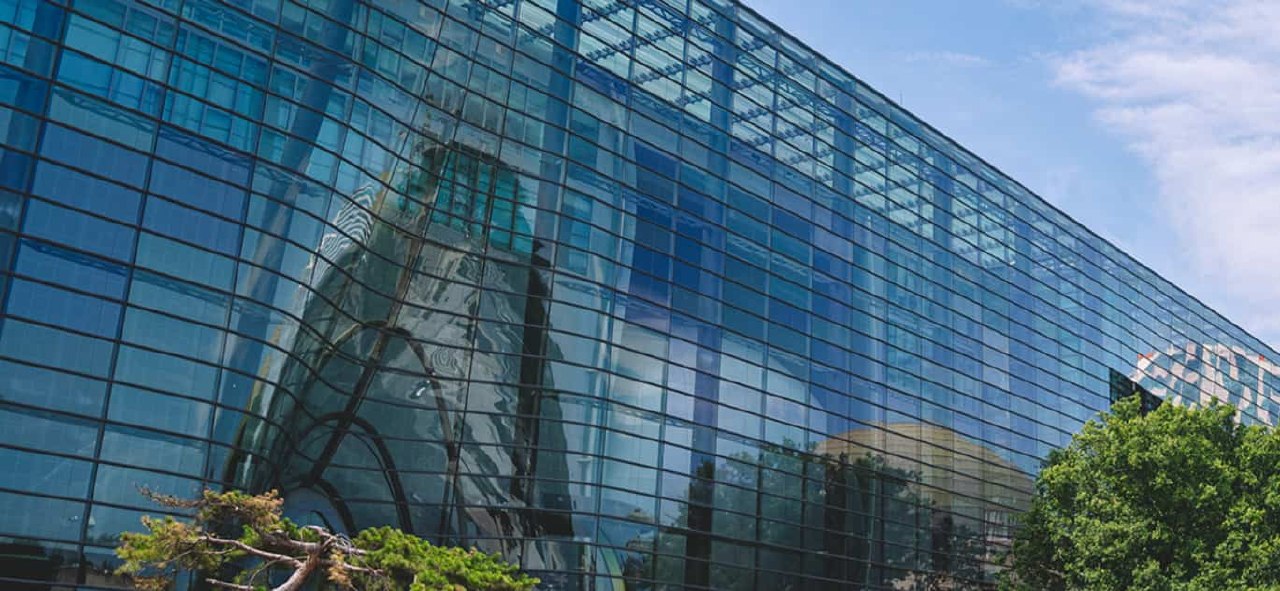
The Beijing Ancient Observatory is a compact site with an outsized story. A 14-meter brick platform rises at the southwest corner of the Jianguomen overpass in Dongcheng District, and eight large bronze instruments from the Qing Dynasty stand on top of it. Below the platform, a courtyard of halls holds exhibitions on Chinese astronomy, calendars, and the arrival of Western astronomical methods.
The site began in 1442, when a corner tower of the Ming city wall was converted into an observation platform. It served as the imperial observatory through the Ming and Qing dynasties and continued astronomical work until 1929, giving it one of the longest continuous observation records of any surviving ancient observatory in the world. It is now managed as part of the Beijing Planetarium and opened as a public exhibition site in 1956.
This guide covers what to see, how to reach the site, how to plan around uncertain opening details, and how to combine the Beijing Ancient Observatory with nearby sights for a half day in eastern Beijing.
Quick Facts
| Item | Detail |
|---|---|
| Location | No. 2 Dongbiaobei Hutong, Jianguomen area, Dongcheng District, Beijing, near the Jianguomen overpass |
| History | Founded in 1442 during the Zhengtong reign of the Ming Dynasty; imperial observatory through the Ming and Qing; observation continued until 1929 |
| Status | Former imperial observatory, now a science-history exhibition site under the Beijing Planetarium |
| Area | Small walled compound with a 14-meter brick platform and courtyard halls; most visits take 1 to 2 hours |
| Admission | Sources conflict between RMB 10 and RMB 20 for adults; check the official channel before visiting |
| Best time | Weekday mornings; spring and autumn for comfortable outdoor viewing on the platform |
| Duration | 1 to 2 hours; longer for astronomy enthusiasts reading the exhibitions |
| Essential preparation | Carry your passport, confirm current hours and closure day, and set up a mobile payment app as a backup for small purchases |
Why Visit the Beijing Ancient Observatory?
Few science sites anywhere let you stand beside original instruments that were used for centuries. The eight bronze pieces on the platform were cast in the Qing Dynasty and combine Chinese decorative traditions with graduated scales and mechanical structures reflecting post-Renaissance European astronomy. The collection is described as the only complete, well-preserved set of large bronze astronomical instruments in the world.
The site also records a meeting of cultures. Missionaries and Chinese astronomers worked together on instruments and calendars, and the exhibitions explain how Western methods were absorbed into Chinese practice. The instruments abandoned the older Chinese division of the sphere into 365.25 degrees in favor of 360 degrees, a small detail that captures a large shift in thinking.
The observatory suits travelers interested in science, imperial history, and East-West exchange, as well as families looking for a short, uncrowded museum stop. Photographers will appreciate the contrast between the dark brick platform and the glass towers of the nearby central business district.
Tickets: Confirm the Price Before You Go
Published ticket prices for the Beijing Ancient Observatory conflict. One older source lists RMB 10 per adult, while a more recent travel listing gives RMB 20. Treat the price as time-sensitive and confirm it on the official Beijing Planetarium channel or at the ticket office before you rely on a budget figure.
| Ticket type | Guidance | Notes |
|---|---|---|
| Adult ticket | Check the official channel | Sources conflict between RMB 10 and RMB 20; confirm before visiting |
| Concessions | Check the official channel | Half-price entry for students, teachers, and seniors with certificates has been reported; verification required |
| Children | Check the official channel | Free entry for children 6 and under has been reported; confirm on site |
| Combined or pass access | Check the official channel | Some local museum passes have been reported to include entry; confirm eligibility before purchase |
| Booking | Check the official channel | On-site ticket purchase has been accepted; advance reservation rules may change |
| Payment | Mobile payment or cash backup | Mobile payment is widely used in Beijing; keep a small cash backup for ticket counters |
Buy tickets only at the official ticket office or through official booking channels. Avoid touts offering discounted entry outside the gate, and do not pay third parties for a reservation you cannot verify.
Opening Hours: Check the Closure Day
Opening days and closing times are the least consistent details in available sources. The Beijing Planetarium’s own introduction lists Monday and Wednesday to Sunday from 9:00 AM to 4:30 PM with last admission at 4:00 PM, closed on Tuesdays except national public holidays. Other listings give a 5:00 PM close, a Monday closure, or a Monday and Tuesday closure. Plan around the official channel and keep a flexible backup morning.
| Period | Hours | Notes |
|---|---|---|
| Standard schedule | Typically 9:00 AM to 4:30 PM | Last admission around 4:00 PM; confirm before visiting |
| Closure day | Check the official channel | Most official-style sources cite Tuesday; some older listings cite Monday or both Monday and Tuesday |
| Public holidays | Check the official channel | Tuesday closures are usually waived on national public holidays; holiday hours may differ |
| Last entry | Usually 30 minutes before closing | Do not arrive late in the afternoon |
| Platform access | Check on arrival | Access to the instrument platform has varied over time; ask at the ticket office |
| Exhibition halls | Check on arrival | Courtyard halls may close earlier or open selectively; check signage on site |
Getting There
The observatory sits beside the Jianguomen interchange, one of the best-connected points in eastern Beijing. Subway Lines 1 and 2 both serve Jianguomen station, and the walk from the station to the site is short. Sources differ on the exact exit and distance, so follow station signage for the observatory and allow a few extra minutes to find the entrance in the hutong.
Several city buses stop near Jianguomen South, Jianguomen Inner, and Beijing Railway Station East, all within a short walk. A taxi or ride-hailing car is convenient if you are combining the observatory with other stops, but traffic around the interchange can be slow at peak hours. Driving is not recommended because parking near the site is limited.
Insider tip: the observatory is a five-minute walk from the China Customs Museum, so pair the two for a quiet half day away from the main tourist crowds.
Suggested Routes
| Route | Duration | Best for | Terrain |
|---|---|---|---|
| Platform and Courtyard Circuit | 1 to 1.5 hours | First-time visitors and short stops | Flat courtyard, stairs to the platform |
| Astronomy Deep Dive | 2 to 2.5 hours | Science and history enthusiasts | Flat with stairs; standing in exhibition halls |
| Jianguomen Half Day | 3 to 4 hours | Travelers combining nearby museums | Mostly flat city walking |
| Family Discovery Walk | 1.5 to 2 hours | Families with children | Flat, with a supervised stair climb |
Route 1: Platform and Courtyard Circuit
Duration: 1 to 1.5 hours. Start and end: main entrance. Terrain: flat courtyard with stairs to the platform.
Entrance gate → courtyard exhibition halls → Shadow Observation House → stairs to the platform → eight bronze instruments → descend and exit. Read the introductory panels first so the instruments on the platform make sense, then climb for the view over the city.
Route 2: Astronomy Deep Dive
Duration: 2 to 2.5 hours. Start and end: main entrance. Terrain: flat with stairs and standing.
Entrance gate → Ziwei Palace exhibition on ancient Chinese astronomy → west wing exhibition on Western learning → calendar displays → Shadow Observation House → platform instruments → courtyard replicas. Allow time to compare the graduated scales on the bronze pieces with the explanations in the halls.
Route 3: Jianguomen Half Day
Duration: 3 to 4 hours. Start: Jianguomen subway station. End: Beijing Railway Station area or a nearby mall.
Jianguomen station → Beijing Ancient Observatory → China Customs Museum → lunch in the Jianguomen area → walk along the old city wall remnants. This route keeps walking short and offers a quiet alternative to the central tourist corridors.
Route 4: Family Discovery Walk
Duration: 1.5 to 2 hours. Start and end: main entrance. Terrain: flat with a supervised stair climb.
Entrance gate → courtyard dragon and star displays → short exhibition hall visit → platform instruments → photo stop with the modern skyline. Keep the visit short, focus on the animal and star motifs children enjoy, and hold hands on the platform stairs.
Must-See Highlights
- The brick platform: a 14-meter Ming structure built into the old city wall. Walk around its base to see how the observatory was fitted into the fortifications.
- Equatorial armillary sphere: a large bronze ring instrument for measuring celestial coordinates. Look for the dragon supports and the fine graduation marks.
- Ecliptic armillary sphere: designed to track the sun’s apparent path. Compare its rings with the equatorial instrument to understand the different measurement goals.
- Celestial globe: a bronze sphere mapping stars and constellations. The casting shows both Chinese constellation names and European mapping conventions.
- Altazimuth instrument: used to measure altitude and azimuth. Its size makes it one of the most photogenic pieces on the platform.
- Quadrant: a quarter-circle instrument for measuring angles. Notice how the scale is divided and how the instrument was aimed.
- Sextant: a smaller angle-measuring instrument that reflects later refinements in observatory design.
- Ziwei Palace exhibitions: displays on the site’s history, the making of instruments, and Chinese calendar reforms. Start here before climbing the platform.
- Shadow Observation House: where Ming and Qing astronomers measured sun shadows to determine time. The function of the space is easy to miss without reading the panels.
- Skyline contrast: from the platform, the old brick and bronze sit against the glass towers of the central business district. This is the site’s most memorable photo.
Best Time to Visit
Spring and autumn offer the most comfortable weather for the open platform, with clear skies and moderate temperatures. Summer visits are best in the morning before heat builds, and winter visits are quieter but cold on the exposed platform. The instruments are outdoors, so check the forecast and dress for wind.
Weekday mornings are usually the calmest. The site is small and rarely crowded, but school groups can fill the courtyard on weekday mornings. Avoid the first days of major Chinese public holidays, when transport hubs and nearby attractions are busiest, and confirm holiday opening hours in advance.
The observatory is not a night-sky viewing site for general visitors; check the official channel if you are interested in special astronomy events.
Common Mistakes to Avoid
- Trusting one online price: sources list both RMB 10 and RMB 20. Check the official channel rather than budgeting from an old blog post.
- Assuming the closure day: Monday and Tuesday closures both appear in listings. Confirm the current closure day before planning your day.
- Arriving late in the afternoon: last admission is usually around 4:00 PM. Plan to arrive by mid-afternoon at the latest.
- Skipping the courtyard halls: the exhibitions explain the instruments. Without them, the platform is a set of impressive but mysterious metal rings.
- Rushing the platform: allow at least 20 minutes to walk around all eight instruments and read the labels.
- Forgetting your passport: carry it for ticket checks and any registration requirements.
- Relying only on cash or only on a phone: mobile payment is common, but keep a small cash backup for counters.
- Expecting a large museum: the site is compact. Combine it with nearby sights rather than planning a full day.
- Ignoring the stairs: platform access involves steps. Wear stable shoes and supervise children.
- Buying from touts: use the official ticket office or official booking channels only.
- Missing the nearby Customs Museum: it is a short walk away and makes a natural pairing.
- Assuming night access: the site is a daytime museum; do not plan an evening stargazing visit without checking for special events.
What to Bring
- Passport for ticket checks and identification
- Comfortable walking shoes for the courtyard and platform stairs
- Sun hat and sunscreen for the exposed platform in summer
- Light windproof layer for spring and autumn
- Warm coat and gloves for winter platform viewing
- Water bottle for warm days
- Phone with a mobile payment app and a small cash backup
- Camera or phone for the skyline and instrument details
- Notebook or translation app for reading Chinese exhibition labels
- Small daypack that meets museum security rules
Food and Drink Nearby
The immediate hutong around the observatory has limited dedicated dining, so plan meals in the wider Jianguomen and Beijing Railway Station areas. These are dependable dining zones rather than specific recommended businesses.
- Jianguomen area: a short walk from the site, with a mix of casual Chinese restaurants and chain cafes at moderate prices.
- Beijing Railway Station area: about 10 to 15 minutes on foot, with fast food, noodle shops, and convenience stores for budget meals.
- Central business district malls: a taxi or short subway ride away, with sit-down restaurants and international options at mid to high prices.
- Convenience stores near Jianguomen station: useful for water, snacks, and a quick lunch before or after the visit.
Final Thoughts
The Beijing Ancient Observatory is a small site with a long memory. In an hour or two you can climb a Ming platform, stand beside bronze instruments cast for emperors, and look out at the glass towers of modern Beijing. Confirm the current ticket price and closure day before you go, arrive by mid-afternoon, and read the courtyard exhibitions first. The image to carry away is simple: eight dark bronze rings against the sky, still pointing at the stars they were built to measure.
Sources
- China.org.cn: Beijing Ancient Observatory overview
- China.com.cn: Ancient Observatory feature (2025)
- TravelChinaGuide: Ancient Observatory visitor details
- Trip.com: Beijing Ancient Observatory guide
- Beijing Planetarium: English site
- Trip.com: Ancient Observatory attraction page
- Beijing Planetarium: Ancient Observatory introduction
- Trip.com: Ancient Observatory travel theme page
- Moovit: public transit to the observatory
- Visit Beijing: Beijing Planetarium listing

4 thoughts on this story